Tag: patents

  • Vivo Is Developing Multiple Smartphones With Dual Displays

    Vivo Is Developing Multiple Smartphones With Dual Displays

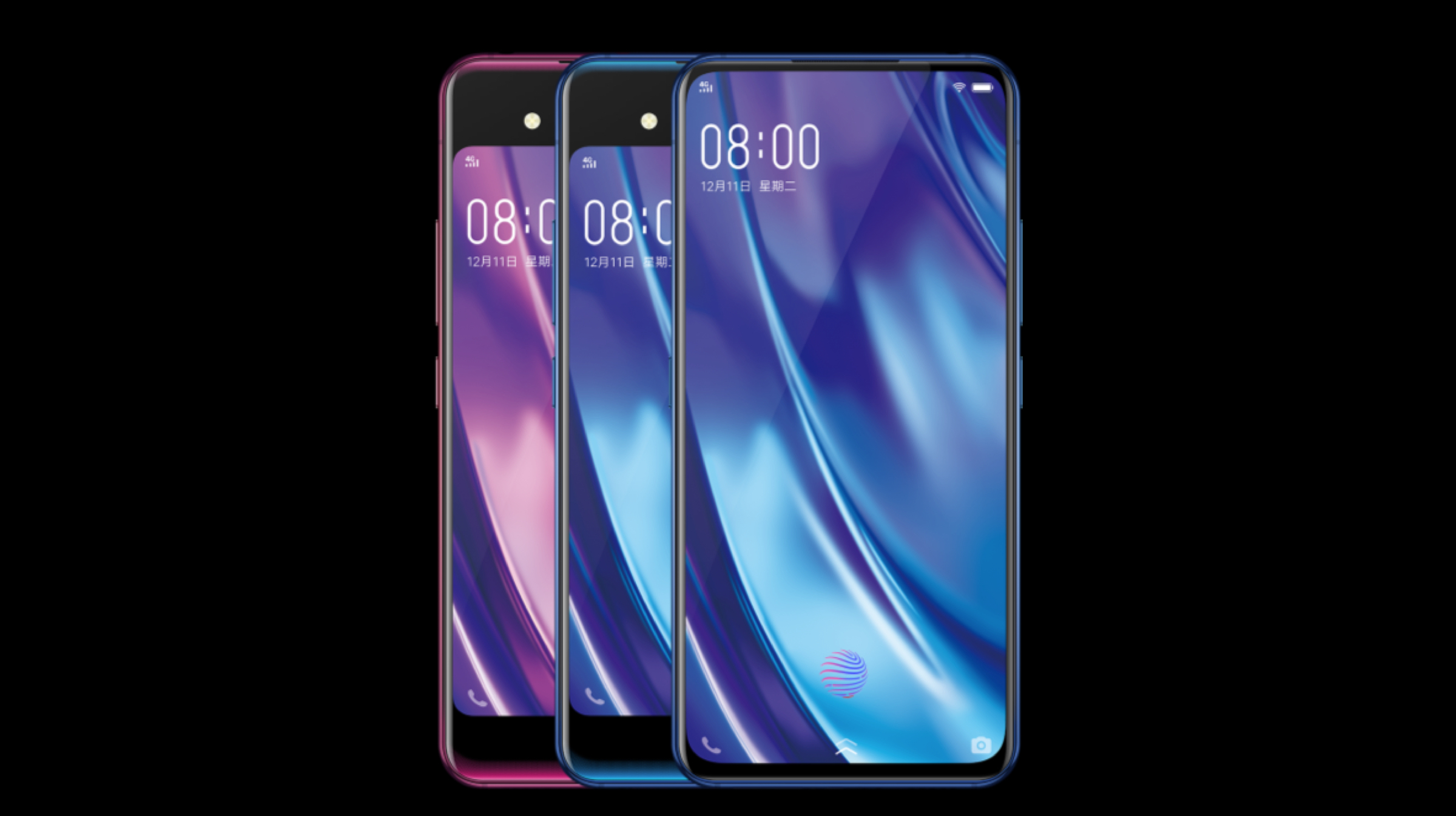
    In the past, Chinese smartphone maker, Vivo had launched a couple of innovative smartphones which include the Vivo NEX and Vivo NEX dual-screen variant. The key highlighting feature of both the smartphones is exceptionally high screen-to-body ratio. However, as the name suggests, the NEX dual-screen variant takes the idea a step further by accommodating dual displays.
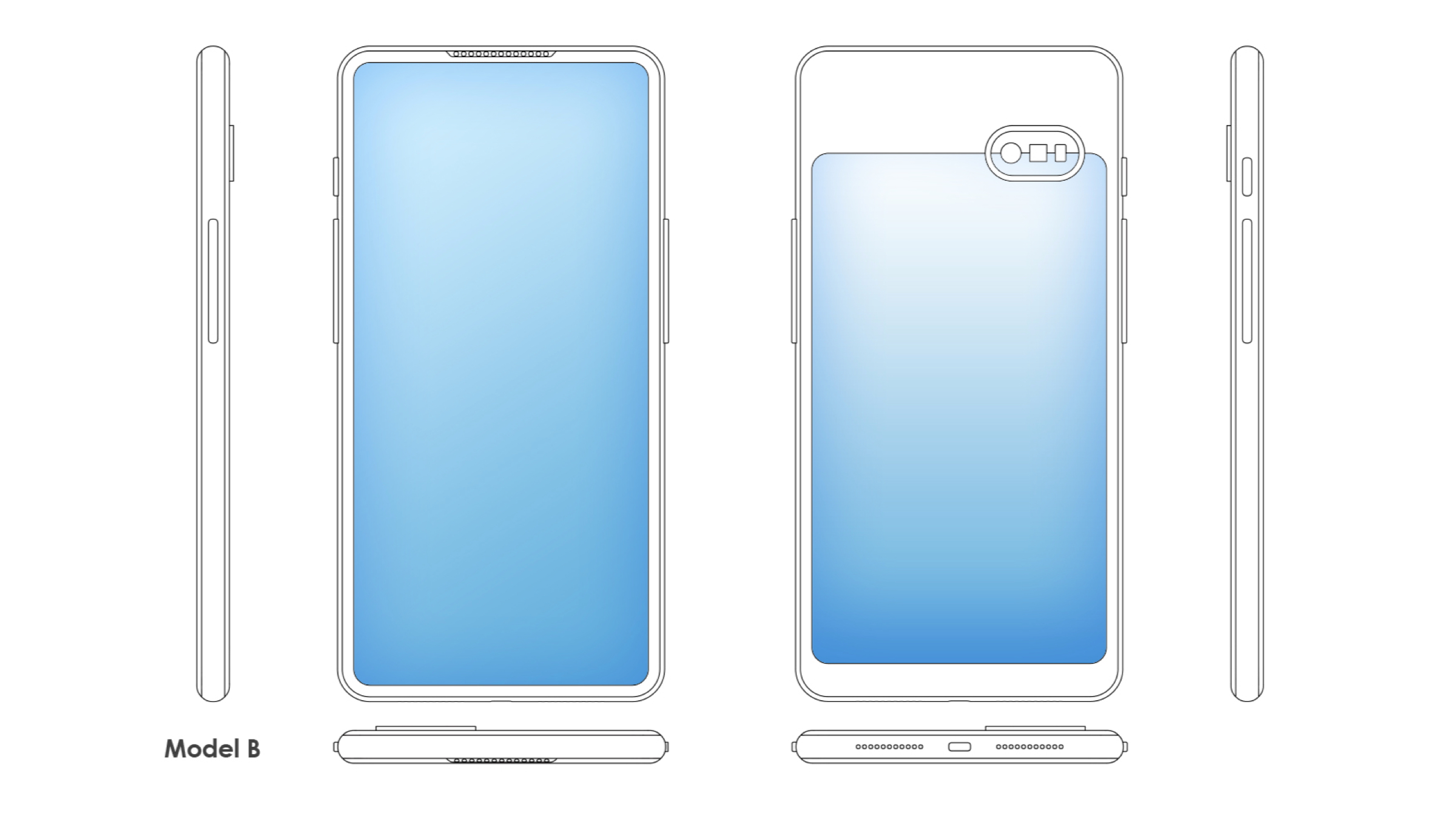
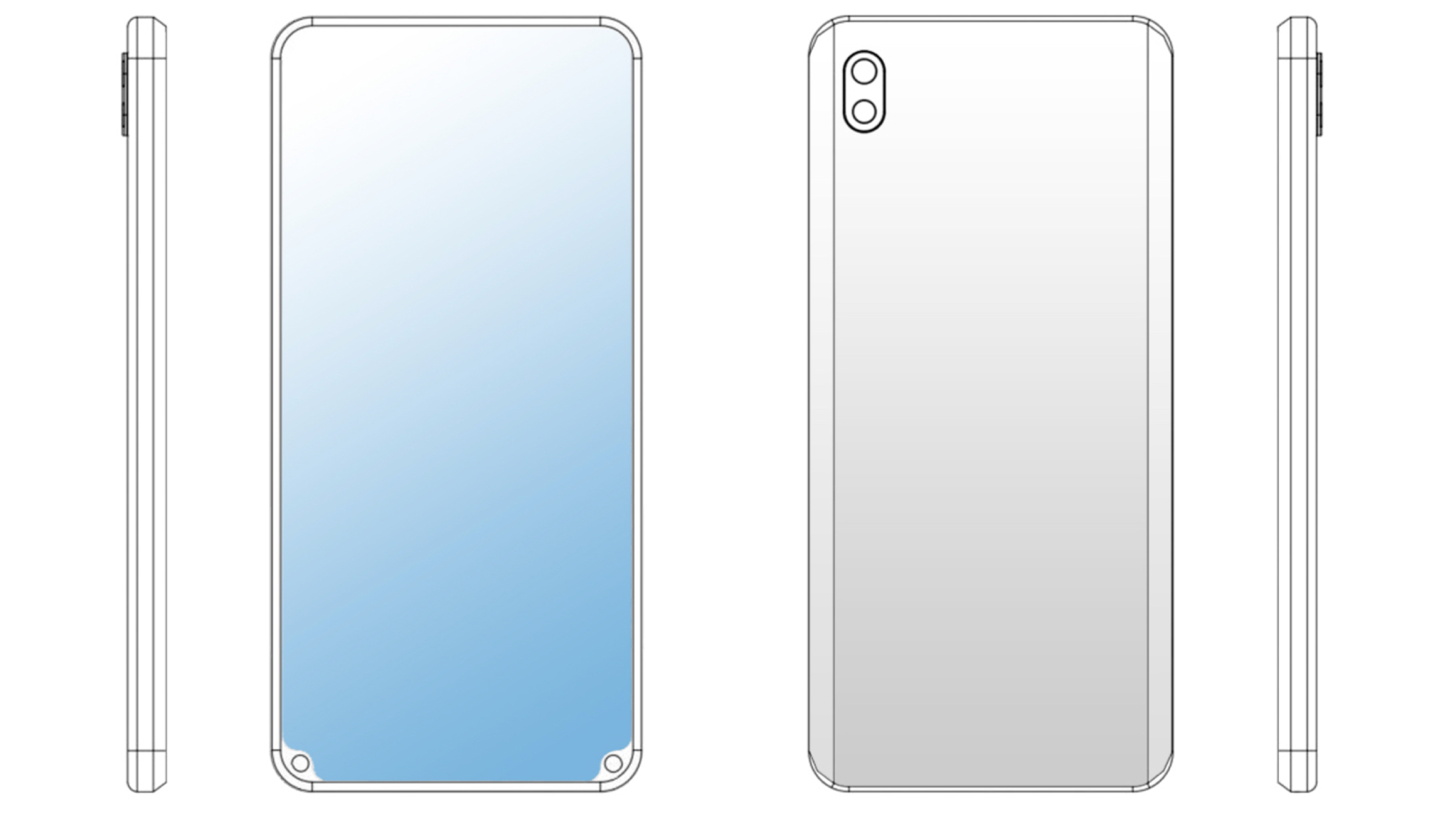
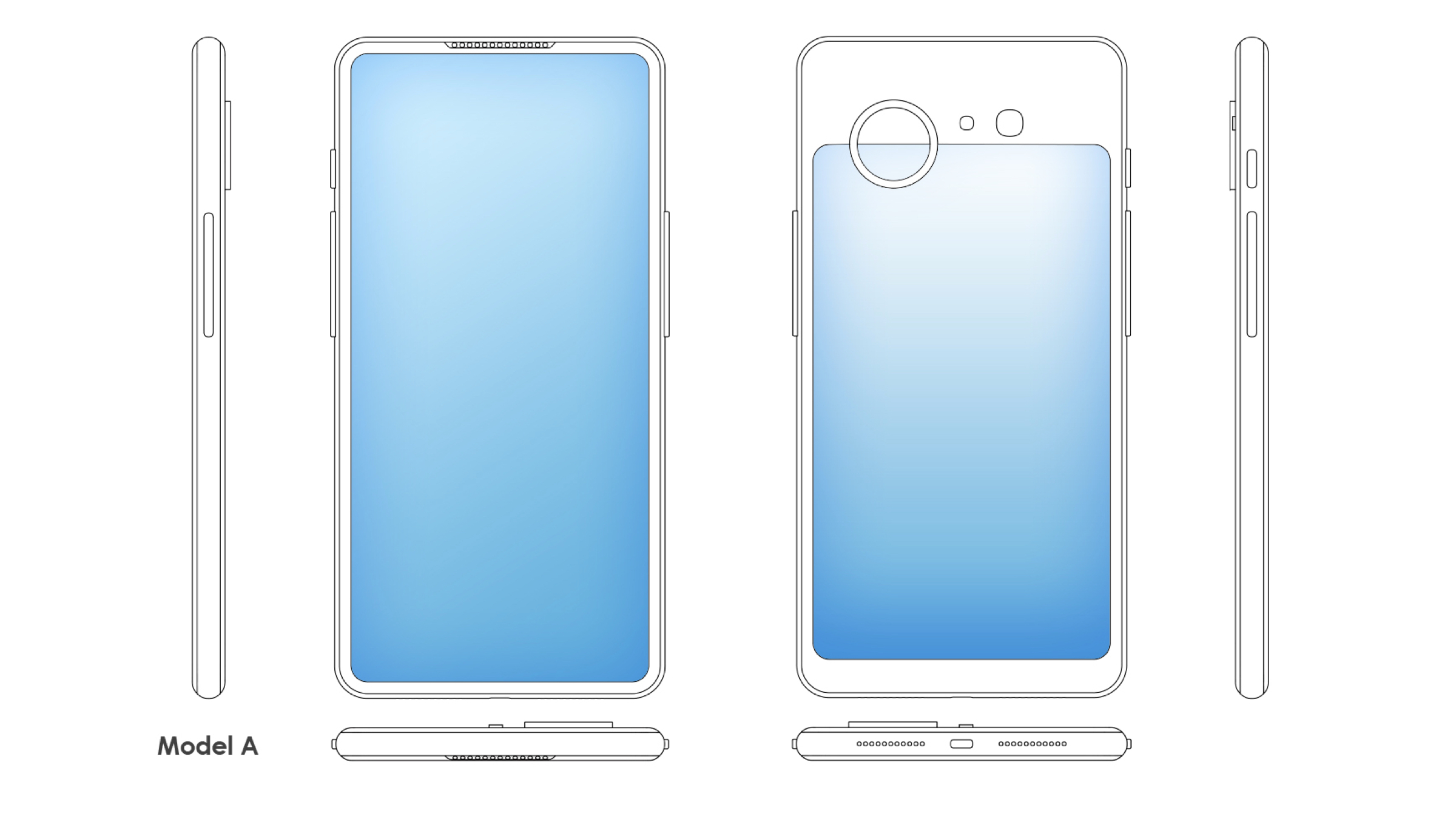
    Vivo NEX Dual Display According to freshly granted patents, Vivo is developing a couple more smartphones that feature two displays. Out of which, one is placed on the front while a smaller secondary display is present on the rear. The two handsets have a similar design with the key difference being disparate camera arrangement.

    Like the original Vivo NEX dual display, both the Model A and Model B in the patens have a large screen edge-to-edge display on the front. The earpiece for receiving phone calls is embedded in the thin bezel right above the display.

    In terms of ports and button, the bottom of both the Vivo handsets is occupied by a USB port which is flanked by the loudspeaker and microphone grille. Moving to the sides, the left side of the devices is occupied by a power button and volume controller. Likewise, the right side also houses another set of volume rockers which can be used depending upon whether the front or the rear display is in use. Vivo NEX Dual Display
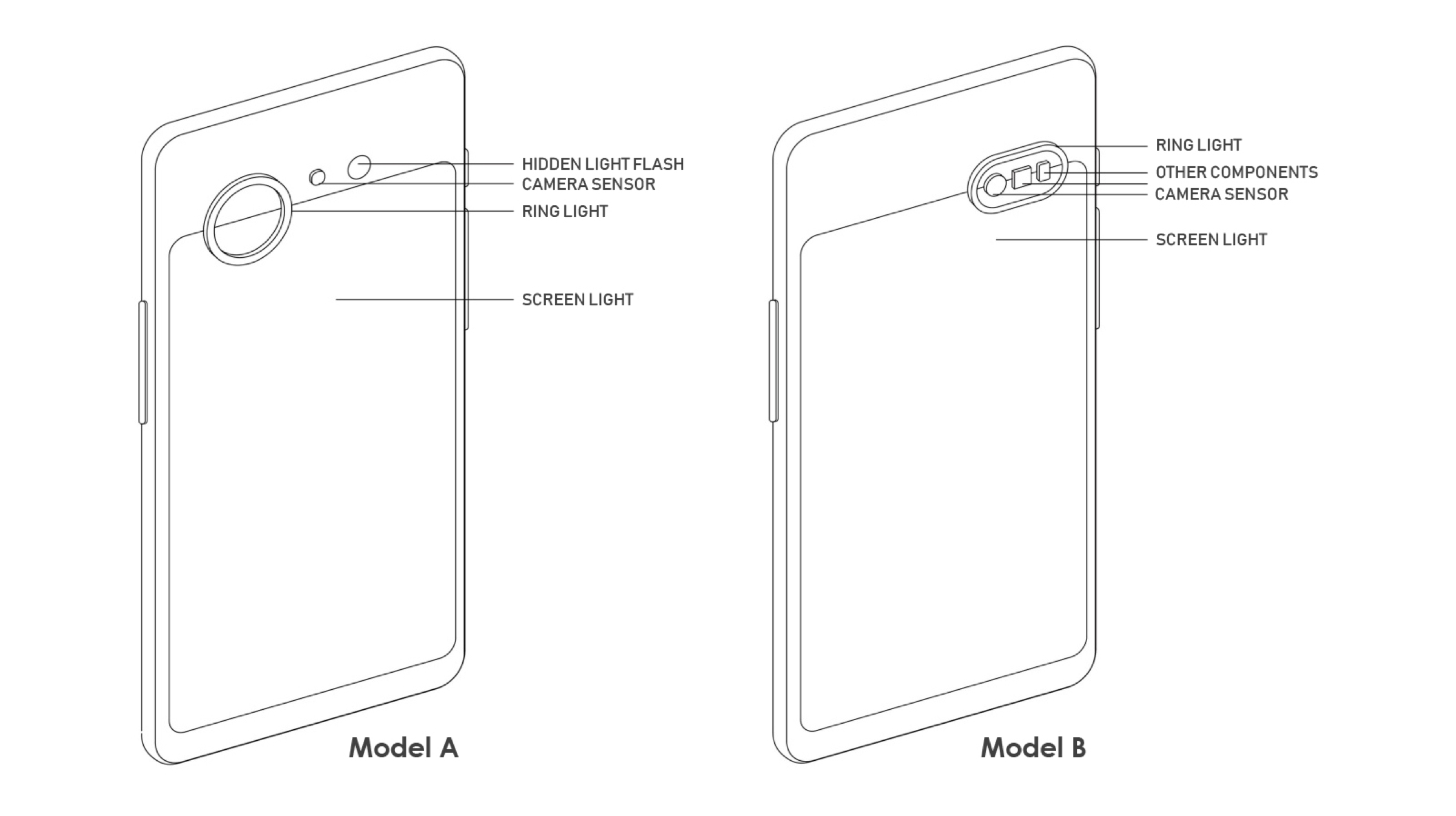
    As previously mentioned the rear of both the Model A and Model B of the Vivo smartphone house a secondary display. But the Model A features a comparatively larger ring light which is accompanied by the camera sensor and a secondary hidden flash. On the other hand, the Model B has a capsule-shaped ring light which surrounds the camera sensor. 

    Besides, both the Vivo smartphones can also utilise the rear display as a screen light as seen on applications like Snapchat. All in all, these Vivo handsets are just slightly modified variants of the original dual-display smartphone. Therefore, we believe they have a high probability of turning into real-life devices which will be commercially available.Vivo NEX Dual Display
    Also Read: Samsung Galaxy Note 10 Leaked In Green And Pink Colour

    Unfortunately, the specs of smartphones are currently unavailable. Though they will be revealed with the official launch which is assumed to happen soon. 

    What are your thoughts on smartphones with dual displays? Do you think they offer any additional advantage over a conventional smartphone? Let us know in the comments below.
  • LG Patents A Smartphone With Triple Selfie Cameras

    LG Patents A Smartphone With Triple Selfie Cameras

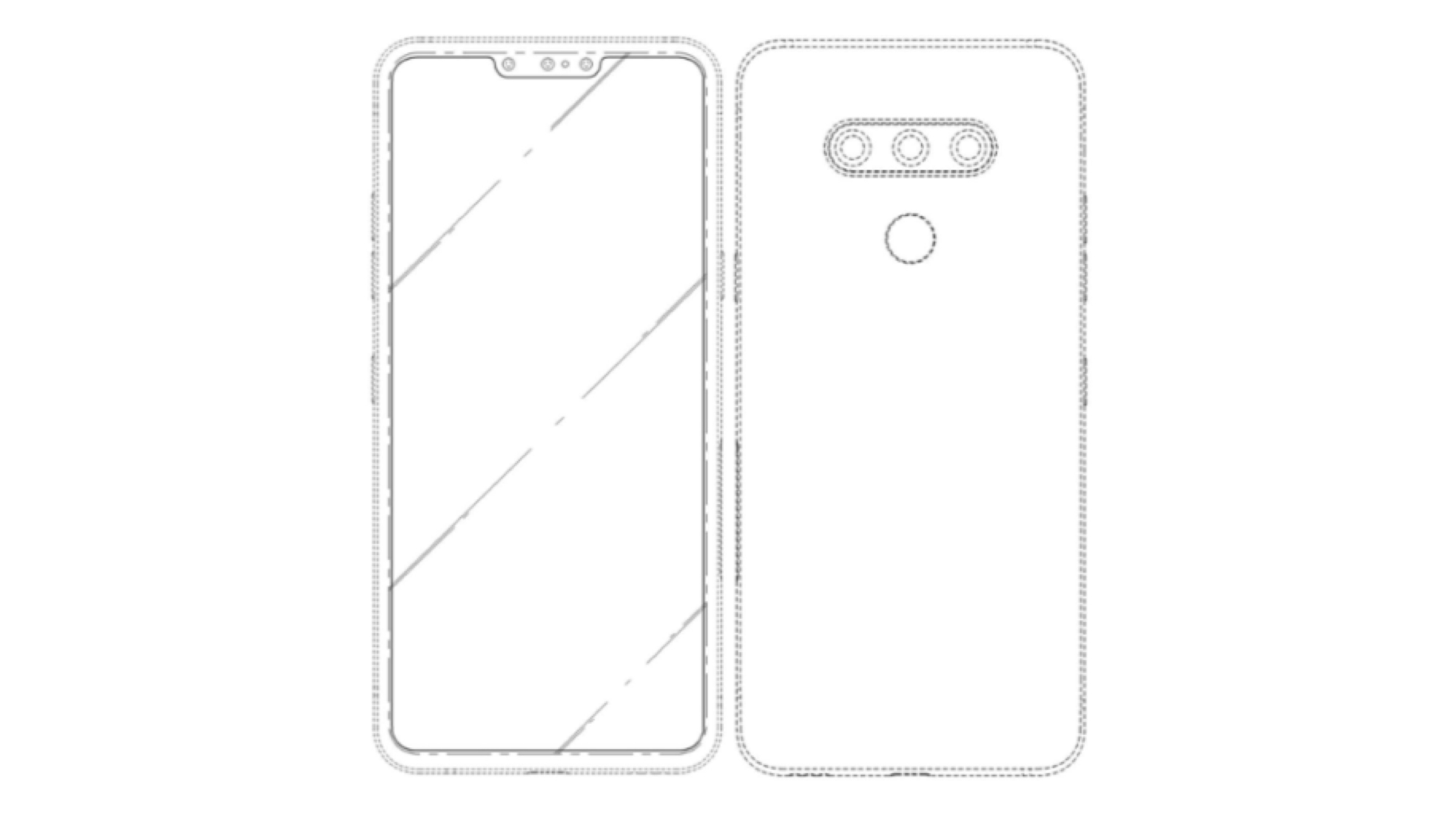
    Korean smartphone manufacturer, LG is known for making smartphones that have uncommon and distinctive features. Earlier this year it showcased the innovative V50 ThinQ that has an attachable second display. Freshly granted patents to the company indicate that it is working on yet another smartphone with unique elements. The patent granted to LG reveals a smartphone that has triple selfie cameras which is a world first except for the swivel camera on the Galaxy A80.

    Patent Disclosures

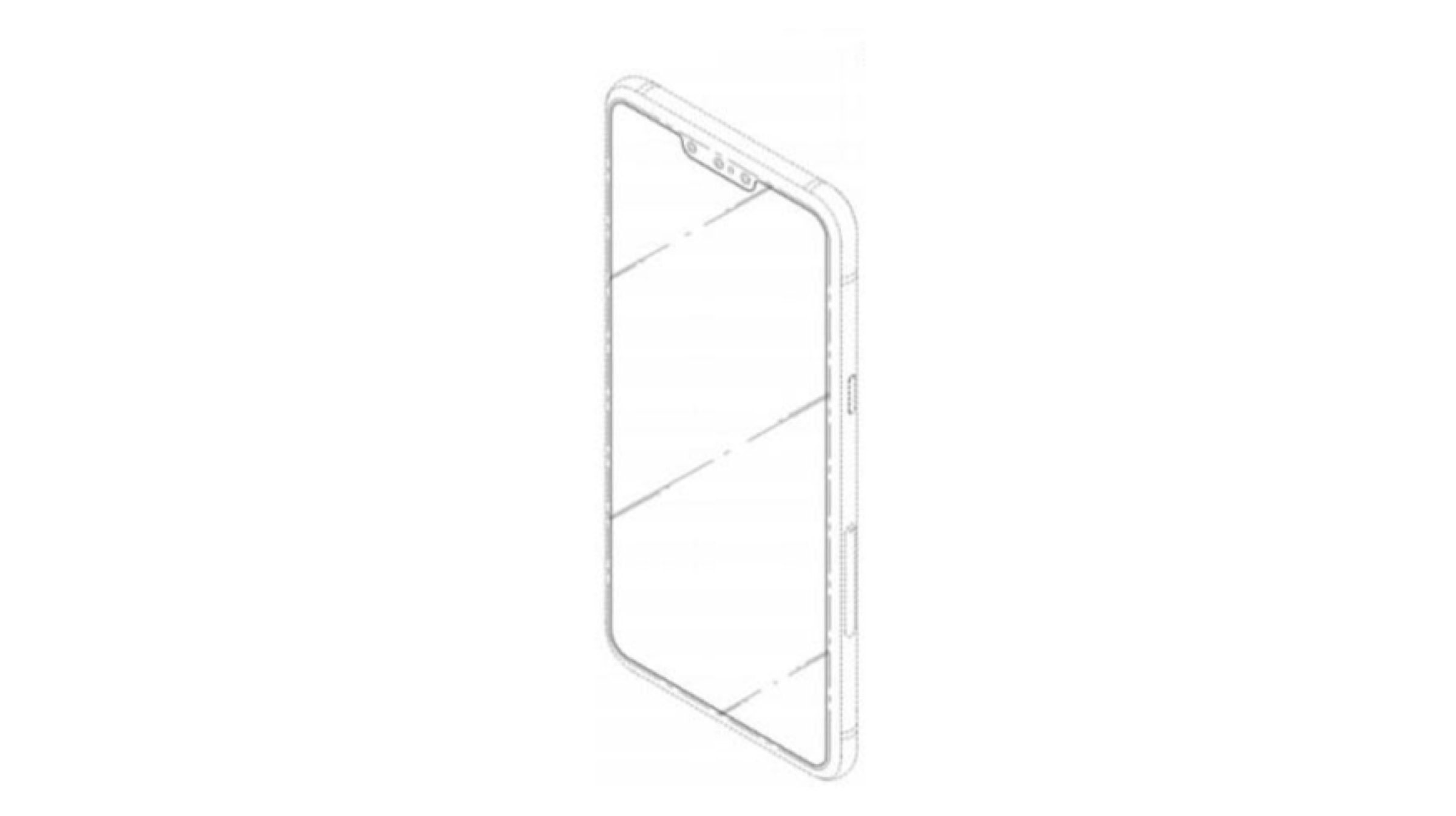
    The patent for the aforementioned smartphone was granted to LG by WIPO (World Intellectual Property Office) on the 19th of April 2019. The patent exhibits a smartphone which is highly reminiscent of several LG devices from the past. However, as previously mentioned, the freshly patented handset has triple selfie cameras which are housed in a wide notch at the top of the display.

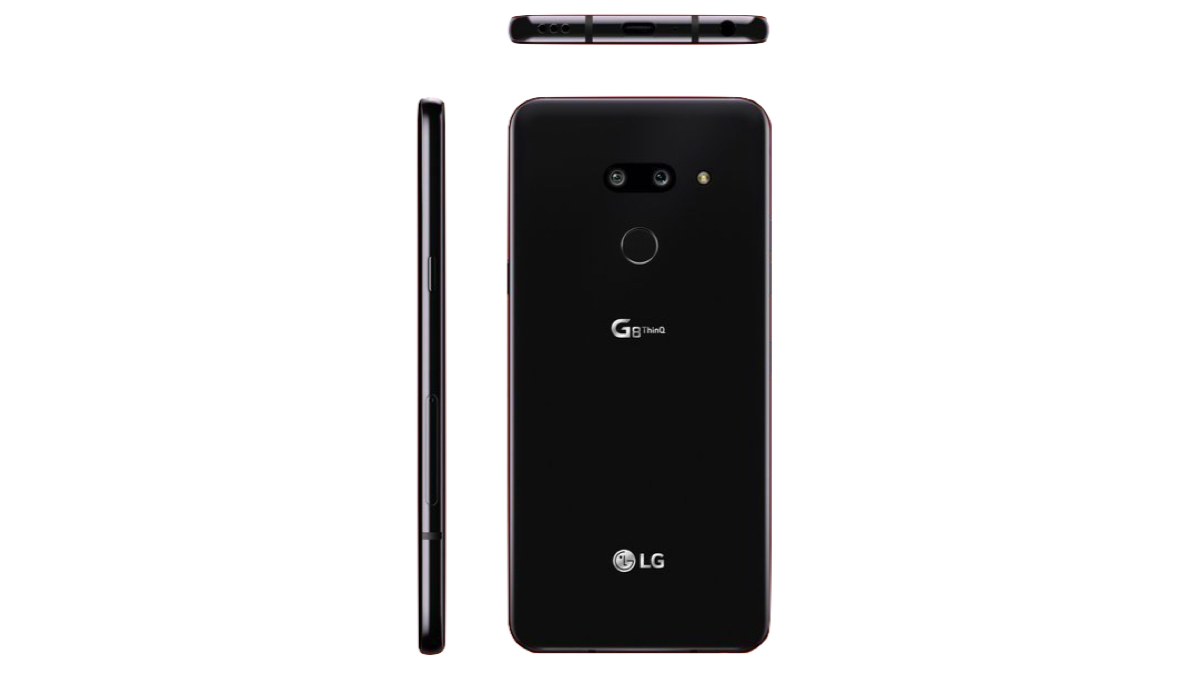
    LG G8 ThinQ

    The rear of the LG smartphone harbours a triple camera setup and a fingerprint sensor. The right side of the device is occupied by the SIM card tray and the power button while its left side is occupied by the volume rockers. The patent exhibits that the top of the device lacks any controls and ports while its bottom houses the loudspeaker griller and a USB port. 

    What Could Three Front Cameras Be Used For?

    Reportedly, the front and rear camera setup of the LG smartphone will utilise a set of similar camera sensors. Like the previously launched LG V50 ThinQ, the upcoming smartphone may have a 12 MP standard sensor, 12 MP telephoto sensor and a 16 MP ultrawide sensor. Furthermore, the company can even opt for a TOF sensor instead of an ultrawide sensor. All in all, precise details about the device will only be publicised once it is addressed by the company. 

    Also Read: 5G Compatible: Huawei Mate 20 X Leaks In Video Before Launch

    LG is yet to confirm the development of such a smartphone, therefore, its launch date cannot be determined or speculated. 

  • Xiaomi Granted Patent For Smartphones With Bottom Notch

    Xiaomi Granted Patent For Smartphones With Bottom Notch

    Another day, another company granted patents for unconventional and bizarre smartphones. Chinese smartphone maker, Xiaomi has been granted patents for two unusual smartphones by the WIPO (World Intellectual Property Office) that have dual front cameras and notch on the bottom of the display. 

    Patent Revelations

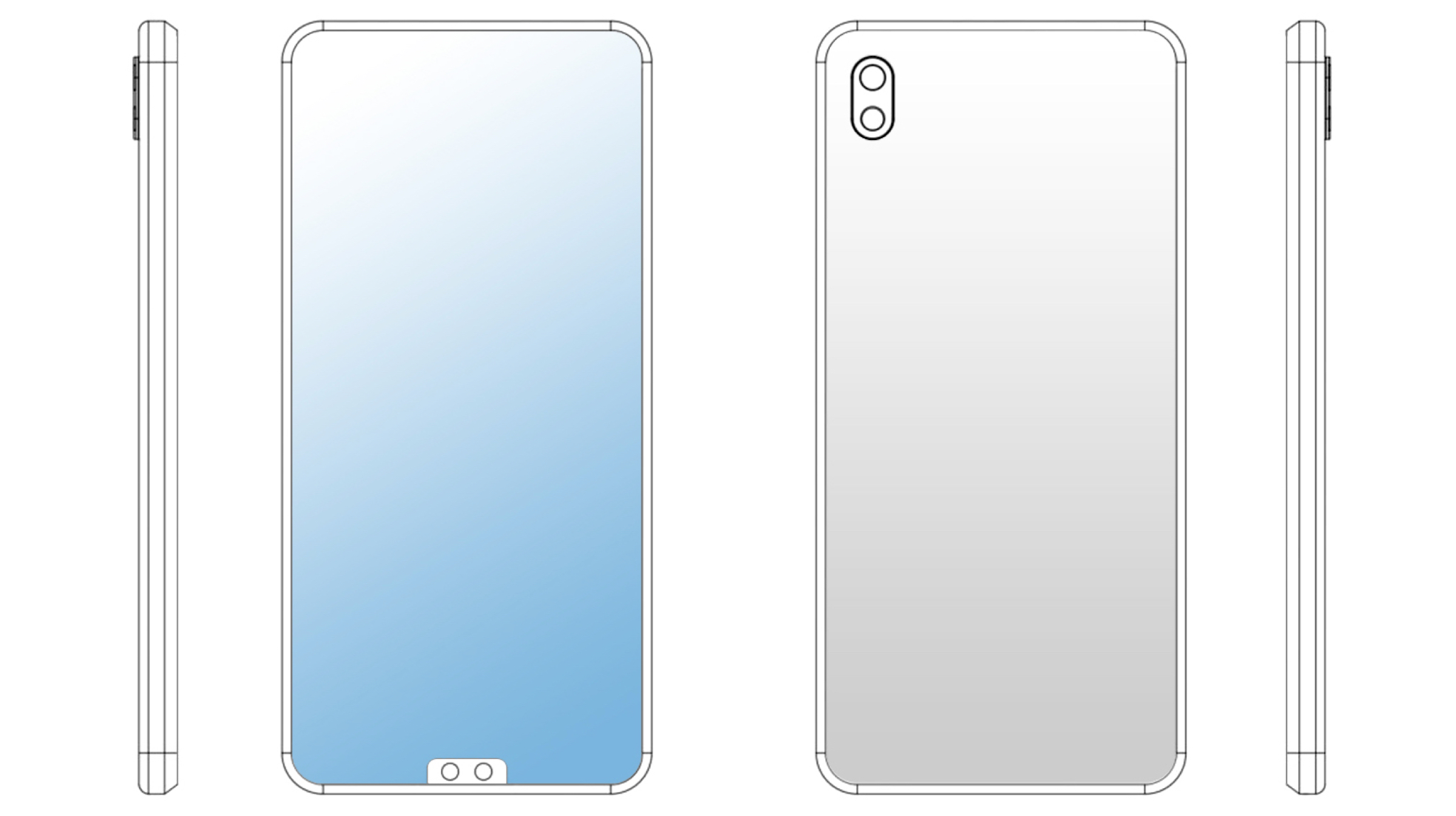
    It is not the first time that Xiaomi has placed the camera at the bottom of a smartphone’s display. The last handset that had similar selfie camera placement was the Xiaomi Mi Mix 2. It is apparent that putting a selfie camera at the bottom of the display helps to minimise the obstruction that a conventional notch at the top of the display causes. In simpler words, most consumers are programmed to read from top to bottom and placing the notch that accommodates the selfie camera at the bottom of the display will indeed result in reducing the intrusion caused by one. 

    The patents granted to Xiaomi exhibit smartphones with minimal bezels around the display which provide the device with a high screen to body ratio. Both the patents granted by Xiaomi have dual front cameras, however, the position of these sensors is entirely different on them. The first patent has a rectangular notch at the bottom which houses a couple of selfie cameras. On the other hand, the second patent has two separate notches on either bottom side. Furthermore, the rear of smartphones on the two patents is also disparate. The smartphone with a single notch has a back that tapers towards the side while the other device has a completely flat back panel. Both smartphones also have rear mounted dual cameras which are placed on the top left side. 

    Also Read: Samsung Will Launch Galaxy Tab 10.1, Tab S5e Galaxy A20 and Galaxy A20e In India This Month

    It is hard to speculate the features or launch date of the aforementioned devices as Xiaomi is yet to make any comments about their development or existence. 

  • Elon Musk Releases All of Tesla’s Patents To Save Earth

    Elon Musk Releases All of Tesla’s Patents To Save Earth

    Elon Musk, CEO of Tesla and SpaceX is known for being a genius, motor mouth billionaire. Under his leadership, Tesla has transitioned from being just another wannabe electric brand to the best selling one. His social media presence is mostly controversial. However, there is no denying that he has done a lot for the planet.

    We now have one more reason to praise him. On Thursday, Elon announced that all of Tesla’s patent will be made public in a bid to save the planet.

    In a blog post shared by him on Twitter, Musk says “Tesla Motors was created to accelerate the advent of sustainable transport. If we clear a path to the creation of compelling electric vehicles, but then lay intellectual property landmines behind us to inhibit others, we are acting in a manner contrary to that goal. Tesla will not initiate patent lawsuits against anyone who, in good faith, wants to use our technology.”

    Tesla Smartphone

    Tesla Going Strong

    This comes after a report in CNBC stated that Tesla has around 83 percent market share of electric cars in the US. The sales of the company also have increased over 50 percent since last year. With this step, Musk feels that more companies will make use of electric powered vehicles and would contribute to save the planet.

    Read more:  Nokia 8.1 With 6GB RAM And 128GB Storage Launched

    Musk said in his blog post that he earlier filed patents to prevent big car companies from copying the technology. And also using the huge marketing and sales apparatus to take over the market. “We couldn’t have been more wrong. The unfortunate reality is the opposite,” he said, noting that electric or clean-fuel cars “at the major manufacturers are small to non-existent.”

    The shares of Tesla declined following mixed reactions to the news.


  • Google Files Patent To Make Foldable Displays Durable

    Google Files Patent To Make Foldable Displays Durable

    Google is a company that is not limited to one particular field or industry. Being in the hardware space for a long time with devices like Nexus and Pixel phones, Pixel tablets and such the company has recently filed for a patent that intends to improve the durability of foldable displays. It seems that the patent is not meant for just one single device but it rethinks how foldable displays are made and operate. The patent details three different types of solutions which can improve the durability of a foldable display panel.

    Limitations Of Foldable Displays

    The currently showcased displays by major companies like Samsung and LG make use of flexible material that is engineered to have high tensile and compressive strength. Every flexible display is rated to bend to a certain degree without experiencing permanent damage. If the display is bent beyond that degree it loses its capability to retract to its original state. Google, however has filed patents for three mechanisms that approach this issue from a completely different perspective.

    Google’s Patents

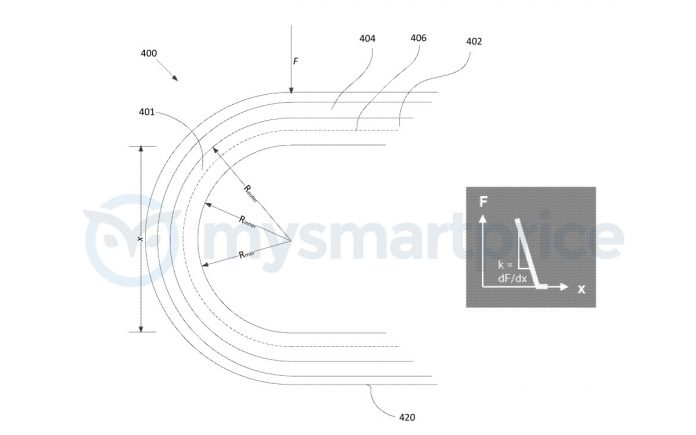
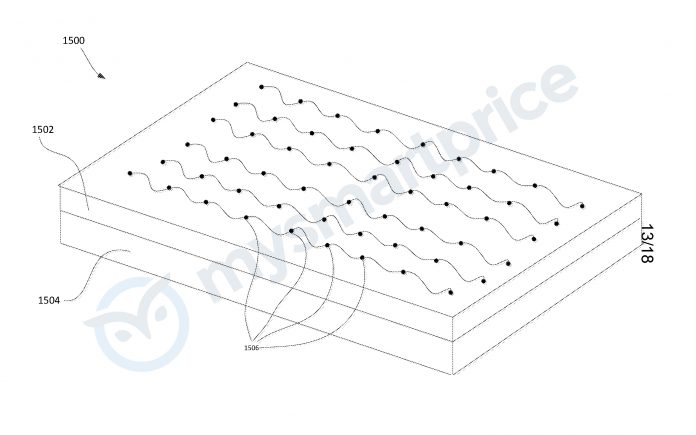
    The patent filed by Google includes three different approaches to making a highly durable foldable display.

    • Low Stretch Fibres- The first type of display has an additional layer of stretchable fibres. The stretchable fibres prevent it from bending after a certain degree. It involves arranging the low stretch fibres in such a manner that ensure that they reach their limit of elasticity before the display is bent beyond its minimum bend radius.
    • Memory Metal Display- This patent has thin wires of a memory metal which is arranged in a grid layout behind the actual display panel. Memory metal is a metal alloy which when bent has the ability to restore back to its original state when one exposes it to a certain temperature. In simple words, attaching such a metal mesh to a foldable display will allow it to spring back to its unfolded state.

    • Non-Newtonian Fluid Display- A non-newtonian fluid is a fluid that does not follow Newton’s law of viscosity. That is constant viscosity independent of stress. Such gel or fluid can be infused with electro-active materials like polymer-metal composites. Electric current and voltage can be used to limit the bending radius of screens having this fluid. Therefore allowing companies to make foldable displays that have a high durability.

    The patents are just a concept as of now. But the ideas look promising and can be shaped into real life future technologies.

  • Samsung Files Patents For New Notch Designs

    Samsung Files Patents For New Notch Designs

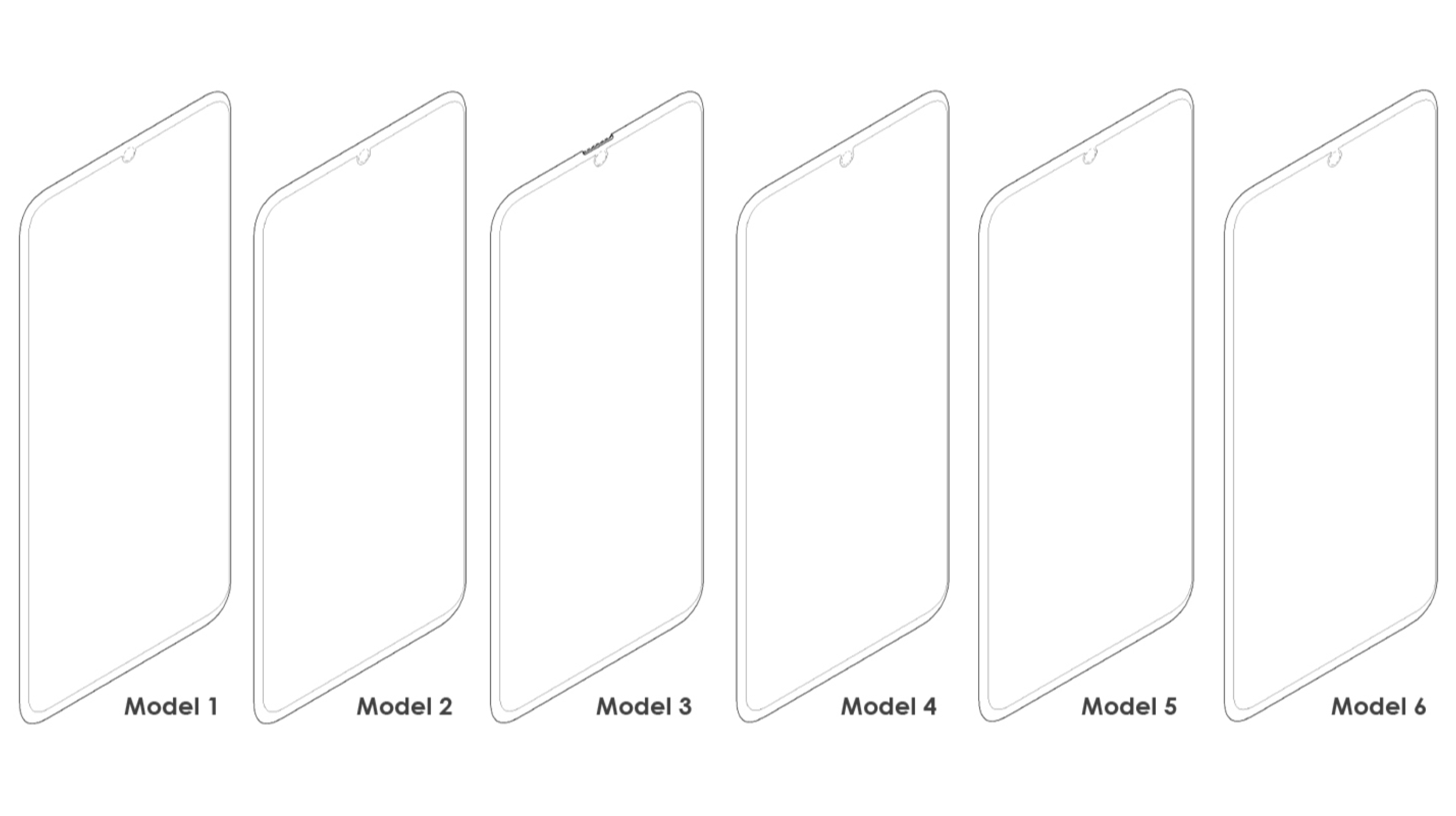
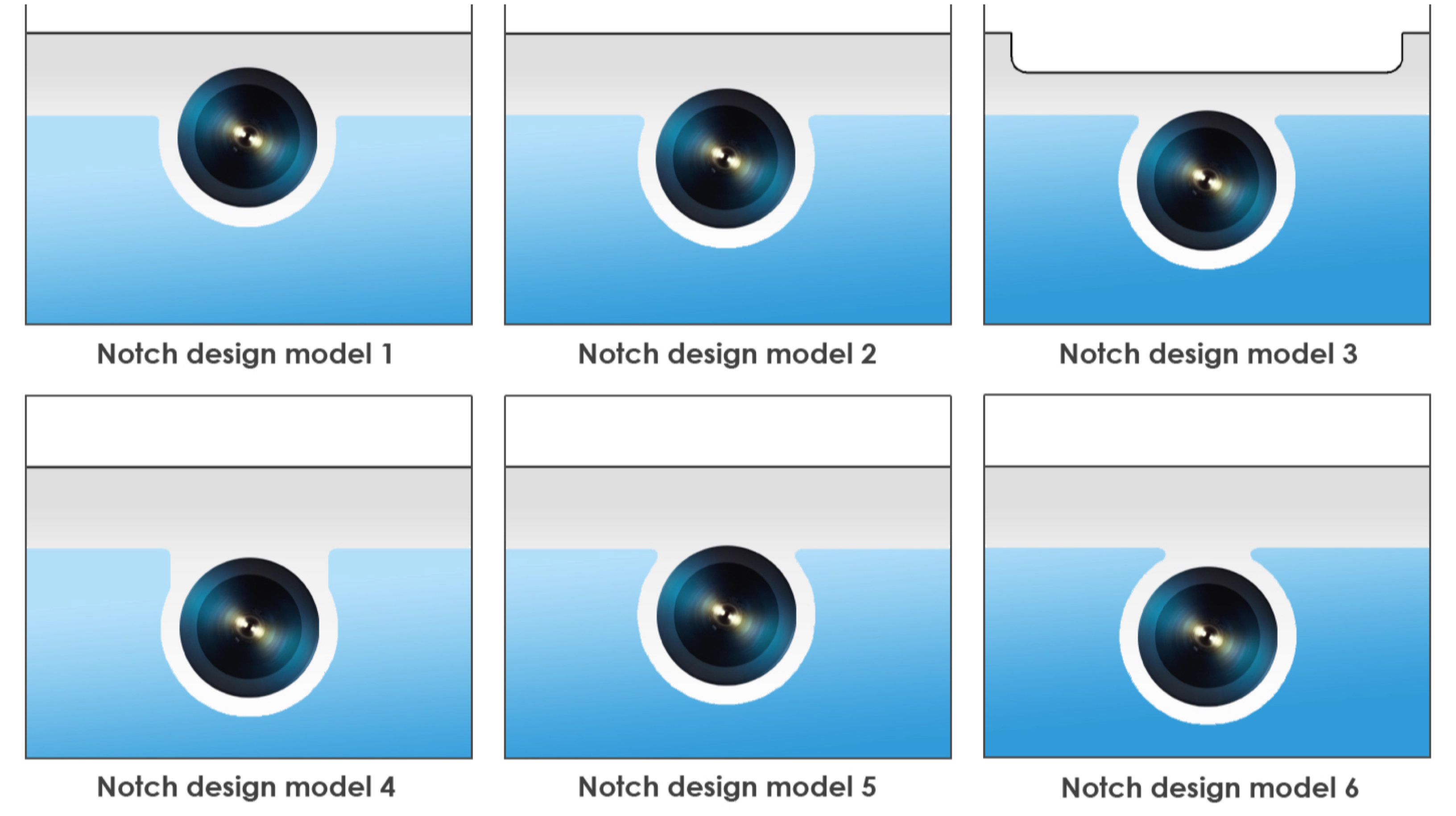
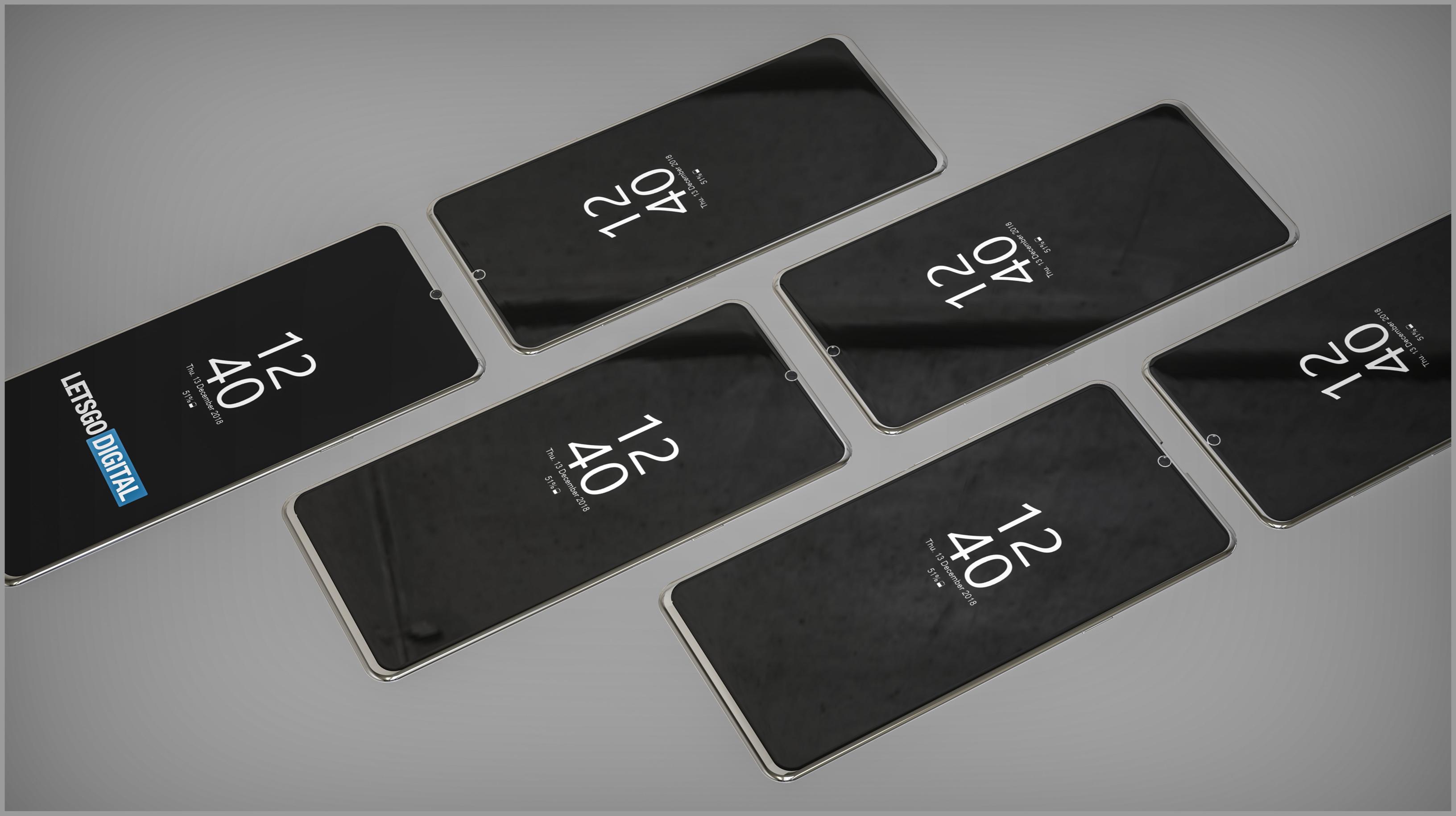
    Samsung held a developers conference last month where they showcased a variety of display notch designs. The designs included an Infinity-O, Infinity-U, and Infinity-V display notch designs. On December 10, Samsung launched the Galaxy A8s smartphone which has an Infinity-O display. The smartphone has a lateral cutout in the display for the front-facing selfie camera. Samsung has also filed patents for six other notch designs. The new patents seem to be a combination of the Infinity-O and the Infinity-U display notch designs.

    New Notch Designs 

    Samsung filed the patents for six new notch designs to the KIPO (Korean Intellectual Property Office) which were granted on 10 December 2018. According to the patents, the height of the notch varies as per different models. Out of the six designs, the notch in four patents is placed below the bezel. While two patents reveal notches that are partly integrated into the bezel. The patent number 3 in this list has a “U” shaped cutout above the top bezel. Although its purpose is unclear as of now, it might be used to attach an accessor or this could be the earpiece of the phone. Certainly, these patents are of less importance to the end customer, it provides vital insight into the design language what future smartphones will look like.

    Also Read: MediaTek launches Helio P90 SoC With APU 2.0

    The first Samsung smartphones with the Infinity-U and the Infinity-V display will launch in 2019. In the future, the notch can evolve into something like the ones on these patents. According to the source manufacturing smartphones with these types of notch designs are comparatively cheaper. Therefore, these notch designs are likely to be seen on midrange and budget smartphones. Samsung is not only gearing up to adopt the notch but they are also planning to bring them to the mass market.

  • Amazon Is Working On Its Own Version Of YouTube

    Amazon Is Working On Its Own Version Of YouTube

    It is no secret that Google and Amazon are embroiled in a battle of power. It might seem silly to consumers but, it might end up costing the two companies millions of dollars. Amazon has been refusing to sell Google hardware on its platform, and Google has responded by blocking YouTube access on Amazon’s line of Echo and Fire TV products.

    Now, it is fair to assume that Google can’t replicate Amazon’s online presence and Amazon, in turn, can’t make a platform as huge as YouTube right now. But, it appears that Amazon is not willing to give up the ambition of having its own YouTube-like platform. Amazon filed trademarks requests with the US Patent and Trademark Office for products called AmazonTube and OpenTube.

    Interestingly, this happened the same day Google announced that Amazon devices will lose YouTube access from the 1st of January.

    Amazon says Amazon Tube and/or Open Tube would provide “non-downloadable pre-recorded audio, visual and audiovisual works via wireless networks on a variety of topics.”

    In the description, Amazon says the new service would also provide “on-line network services that enable users to share content, photos videos, text, data, images and other electronic works relating to entertainment, including, movies, television, audiovisual works, music, audio works, books, theatre, literary works, sporting events, recreational activities, leisure activities, tournaments, art, dance, musicals, exhibitions, sports instruction, clubs, radio, comedy, contests, visual works, games, gaming, festivals, museums, parks, cultural events, concerts, publishing, animation, current events, fashion, multimedia presentations, history, language, liberal arts, math, business, science, technology, hobbies, culture, sports, arts, psychology, and philosophy.”

    Apart from that, a report claims that Amazon has been registering new domain names including AlexaOpenTube.com, AmazonAlexaTube.com, and AmazonOpenTube.com.

    If these are more than just routine patent filing activities and Amazon goes ahead with its plan of launching a YouTube competitor, it will be interesting to see how the consumers respond and whether it will be available to match up to the vast content that YouTube offers,

    [poll id=”58″]

  • Legal Trouble For Apple, Company Could Face $862 Million Penalty

    Legal Trouble For Apple, Company Could Face $862 Million Penalty

    The tech giant has found itself at the centre of legal trouble with a US jury. It has been ruled out that Apple is using technology patented by the University of Wisconsin. The patent in question involves the chips used in iPhone, iPad Mini, and iPad Air.

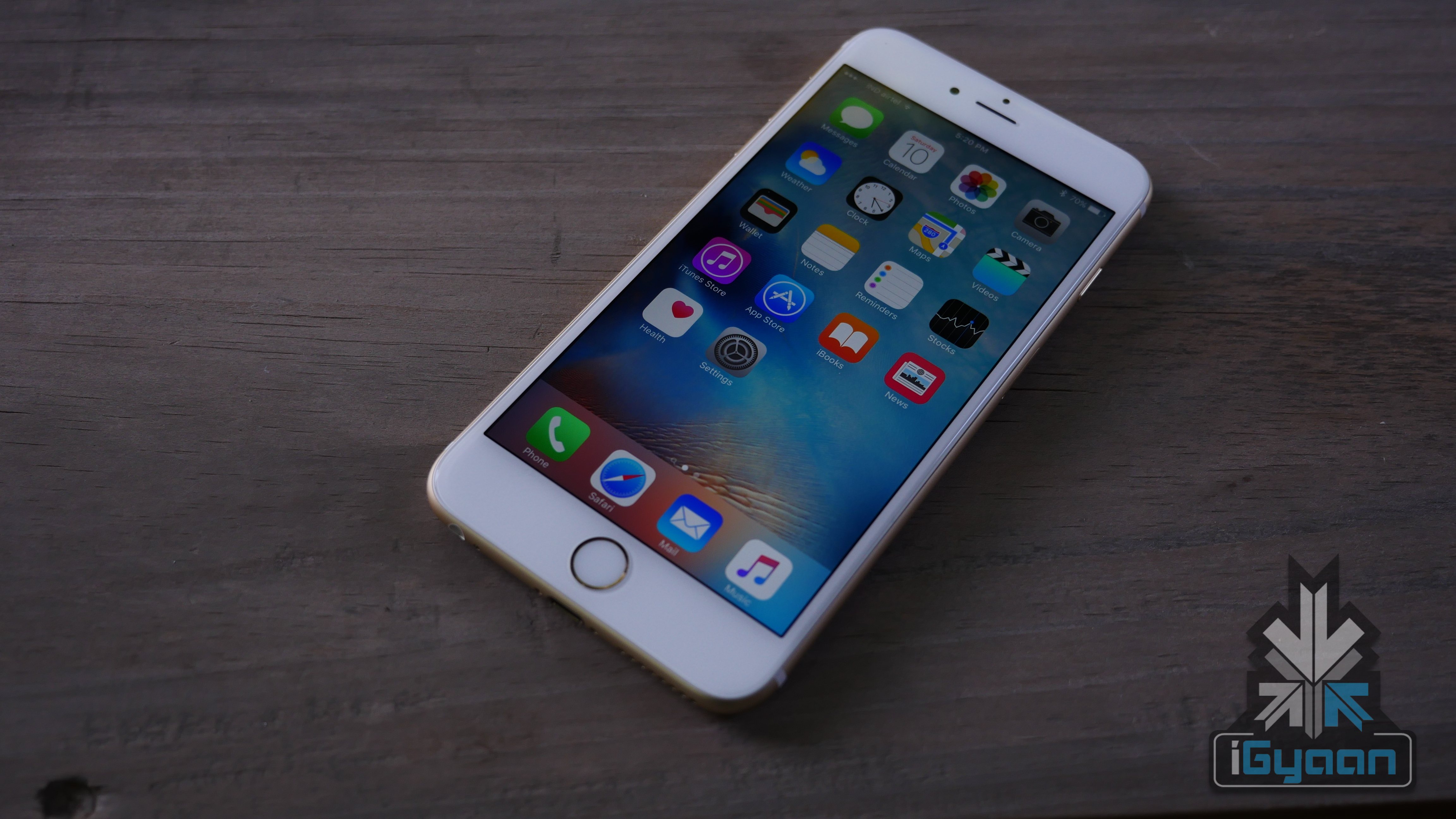
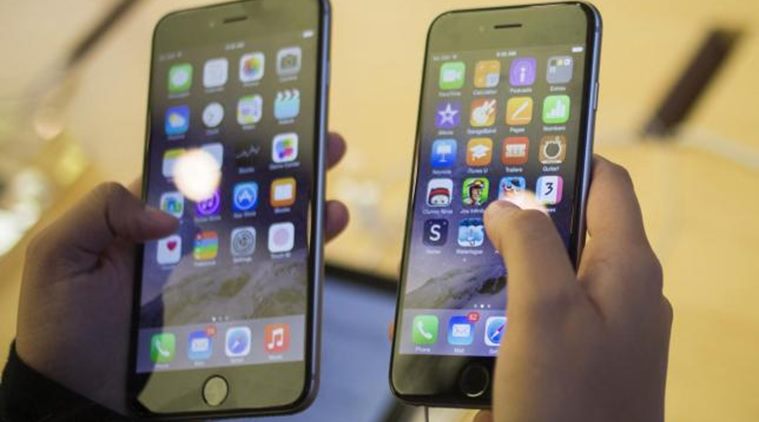
    A customer holds an iPhone 6 (R) and iPhone 6 Plus after the phones went on sale at the Fifth Avenue Apple store in Manhattan, New York September 19, 2014.  REUTERS/Adrees Latif

    Apple was sued last year in April by the Wisconsin Alumni Research Foundation (WARF) and now it may have to pay a fine of almost a billion USD. WARF claims that the A7, A8, and A8X processors used in the iPhone 5S, 6, and 6 Plus were developed from technology that had already been patented by the University in 1998.

    If during the course of the legal proceedings, it is discovered that Apple used the technology in its devices while having knowledge of the patent, the fine amount may go up.iPad Pro Pencil Keyboard 7Irrespective of whether or not Apple has to pay this ridiculously huge fine, there is some more trouble in store for the company. Last month, WARF sued Apple for the technology used in its newest iPhones and iPad Pro. WARF has had a track record of suing tech companies in the past, including a law suit with Intel in 2008 which lasted for almost a year.

  • 5 Tech Patents that Thankfully Never Worked Out

    5 Tech Patents that Thankfully Never Worked Out

    In the world of technology, there is no space for redundancy. Technology is getting updated time after time since tech fanatics are always carving out the next great gadget. The major number of brains swell up for innovating and creating such devices. Gadgets are continuously upgraded and tweaked, but some do not turn out as planned.

    We will see some of the weirdest patents filed by the biggest tech powerhouses today:

    Nokia’s Vibrating Tattoos

    nokia vibrating tattoo

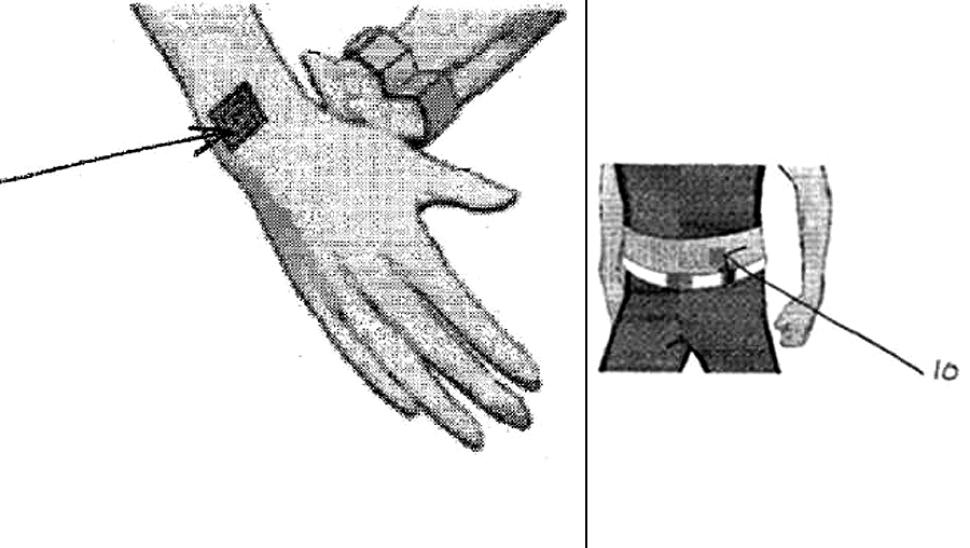
    In 2011, Nokia signed a patent for the first vibrating tattoo. Yes, a vibrating tattoo that alerts users when their phone is ringing. According to the official patent, the apparatus would be able to detect a magnetic field and transfer a ‘percievable stimulus’ to alert its users about an incoming call, text ot dead battery.

    But for some people, getting inked for the sake of technology was too much. People said the device plunges into a ‘creepy territory’. In an era of iPhones and Android devices, what would be the cost of unplugging a permanent tattoo?

    Nokia never discussed anything about the tattoo including the potential health risks.

    Google Background Advertising

    Google background advertising

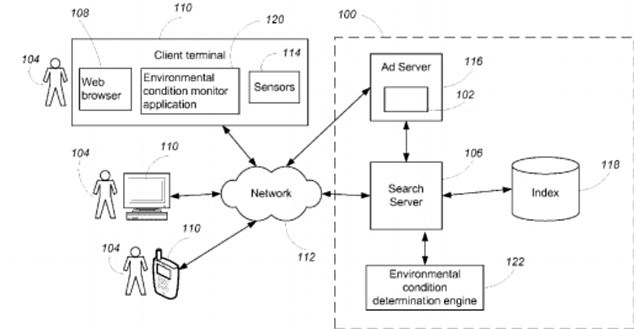
    Google, in 2012, signed a patent that would enable the search giant to base advertisements on background noise. According to the patents, Google would install sensors on handsets that would detect temperature, humidity, sound, light or air distribution near a device and ads would be served accordingly.

    For example, if you are at the gym and make a call, Google will be able to catch the gym machinery in the background and then serve up adverts for home gym equipment.  If it is 30 degrees or more outside, Google will throw in adverts for sun cream, air conditioning units or ice creams.

    But it raised the question of privacy. People were not pleased with the idea of Google tracking down their location wherever they went. Although from the use and productivity aspect, this patent was quite useless.

    Amazon Airbag

    Amazon Airbag

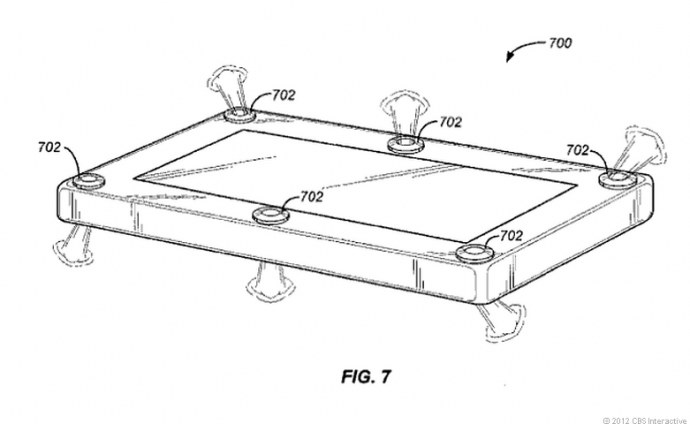
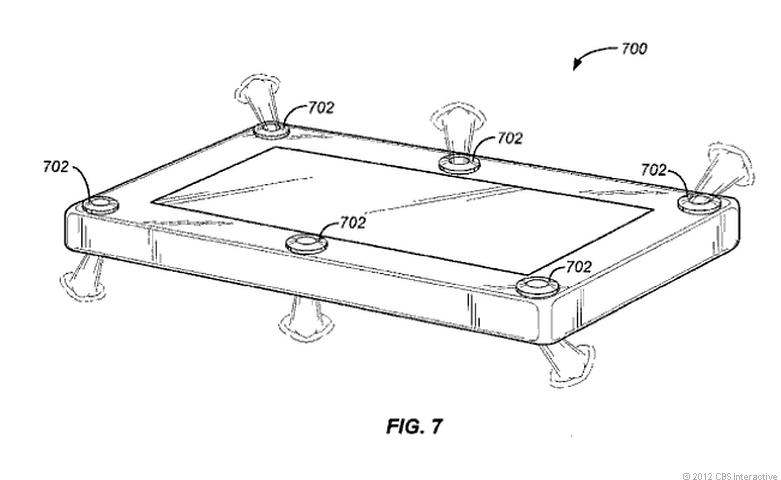
    Amazon came up with this idea in 2012 for a protective system for mobile phones. The patent describes a system that utilizes a gadget’s built-in gyroscope, camera, accelerometers and other onboard sensors to decide if the device has entered an airborne state. If it has, the technology will release airbags to decrease potential damage – or possibly even alter the trajectory of its fall by firing jets of air.

    But this idea gathered much criticism like ‘What’s next, smartphones with built-in parachutes? Or maybe handsets with wings and propellers?’ and ‘From a logistical point of view, the handset would have to be rather big to hide an airbag.’

    There has been no track of progress regarding this airbag. Let’s wait and find out!

    Microsoft Remote Control Charging Patent

    Microsoft remote control charging patent

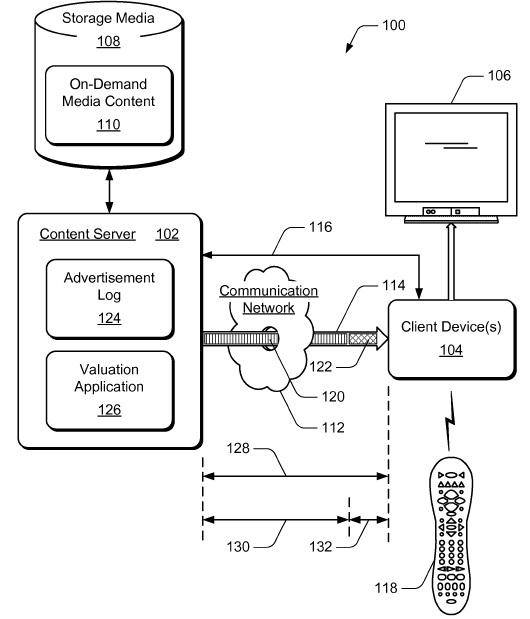
    Imagine a situation where you have to pay more for skipping an ad while watching a movie or watching a sporting event and you have to pay extra for accessing the replay. Luckily, this patent did not fly off as imagined by Microsoft when they filed this patent back in 2004. This wasn’t very welcomed by the masses because these charges would be on top of the base price as a way to boost up profits.

    Apple Air Jet Keyboard Patent

    Apple Air jet keyboard patent

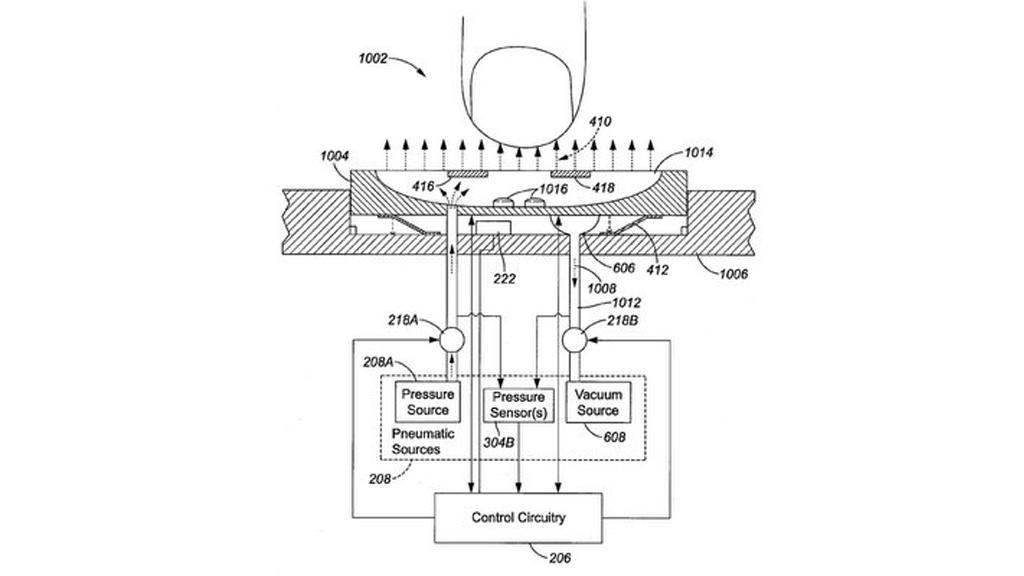
    It isn’t too hard to imagine a flat keyboard without keys- we don’t really look at our fingers when we type, ourselves. But, it’s still a little hard to imagine actually using one. In 2011, Apple patented a unique keyboard design that uses micro-perforations to shoot air at the user’s fingers upon touch, giving tactile feedback to whoever is. One of the biggest objections about virtual keyboards is the lack of tactile feedback, making it much laborious to touch-type at any speed, with much accuracy.

  • Sick of Spoilers on Social Media? Google Patents Tech to Protect You From Them

    Sick of Spoilers on Social Media? Google Patents Tech to Protect You From Them

    Spoilers are one of the most dreaded words for the makers of any new product, may it be a movie or a popular new consumer electronics launch. Companies take every precaution to prevent any information from leaking. But in the age of proactive snoopers on the internet, stopping a leak has become a futile task. Google seems to have taken up the challenge and has just received a patent that might put the brakes on leaks and spoilers on the web.

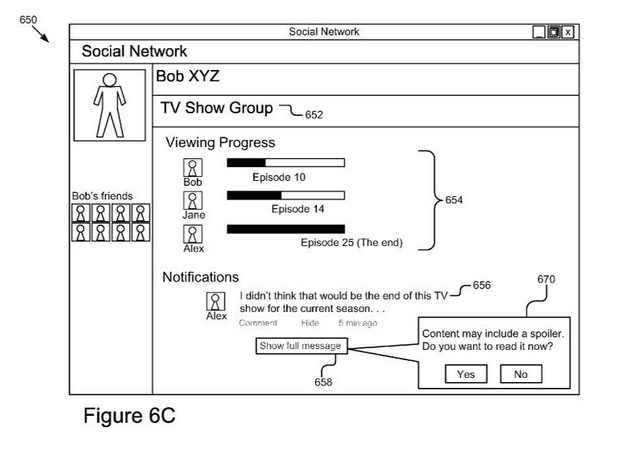
    A patent titled “system and method for processing content spoilers” has been granted to Google. This new filter will let you block spoilers for content like TV shows, books and movies on social media. You can choose to turn off the filter when you have caught up with the content.

    The system digs in deeper than just blocking spoiler posts related to the content. Using Google’s intrusive technology, the filter keeps a track of everything that the user has already seen and filters out content that you are yet to see. This will help you prevent getting bombarded with the spoilers for Game of Thrones (GoT) or House of Cards episodes that you are yet to watch.

    Spoiler patent Google
    A sample figure in the patent application.

    There is no timeframe yet as to when this new technology will be inducted. Google has said that it holds many patents, and there are no immediate plans as of yet to introduce the technology. To be successful, Google will have to tie-up with social media companies that would require a lot of negotiations. They might also want to expand the field to include products like smartphones, which are one of the biggest victims of leaks. It is apparent that there are some creases that need to be ironed out before the spoiler-filter comes online.

    The technology in itself looks interesting and is a kind of censorship that will be appreciated by all GoT fans who try to stay off social media after the telecast. Also, now that the cats out of the bag on the Google patent, we might see some copycat services who’ll offer similar features. Well only if this story about the leak filter could have used a leak filter.

  • Twitter Buys 900 IBM Patents

    Twitter has agreed to buy 900 patents from International Business Machines Corp. to gain access to new technology and build a defense against infringement suits.

    The deal came about a month after Twitter revealed that IBM had accused it of violating three of its patents related to advertising, “resource locators,” and discovery of contacts. Twitter was willing at that time to handle the situation outside of court, and it appears it went that way.

    A cross-licensing agreement will help safeguard Twitter against similar claims in the future. The most high profile exhibit of buying patents to curb future lawsuits would be Google’s purchase of Motorola Mobility.

    IBM is one of the industry’s largest research spenders and stockpilers of intellectual property, a consistent leader in US patent filings and the owner of some 41,000 patents. Twitter is following on the heels of Facebook, which itself faced similar claims before its own 2012 IPO. 

    Twitter is seeking to get more revenue from retailers and is trying to make it easier for users to shop via its 140-character messages.

  • Samsung Patents Design For Another Wearable Device: Sports Glasses

    Samsung Patents Design For Another Wearable Device: Sports Glasses

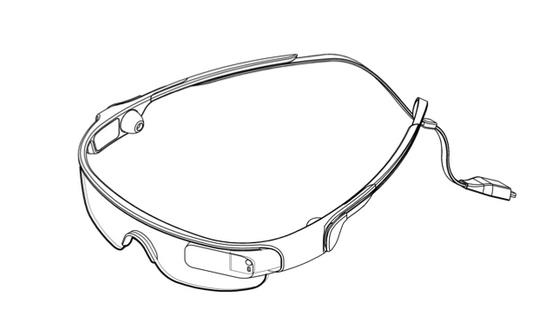
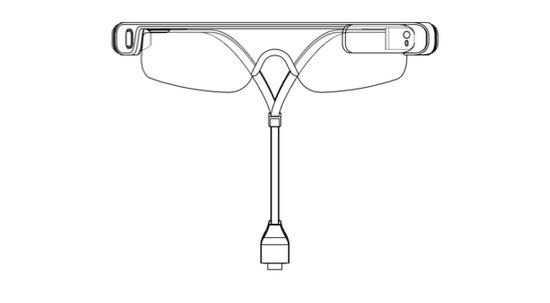
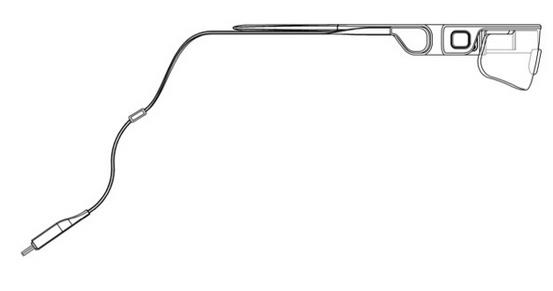
    A design patent registered with Korean authorities shows an electronic device in the form of spectacles. It has been categorized as a type of sports glasses.

    This design is of a type with earphones integrated, allowing to take phone calls and listen to music during workouts,” according to patent filed by Samsung earlier this year. The device is supposed to connect to a smartphone and display alerts for information on the phone. The device features a lens that is either transparent or translucent, as claimed. From the images shared it seems much like the Google Glass but the Samsung device looks much on to the sporty look. A Samsung spokeswoman said the company doesn’t comment on future product plans.

    sports glasses

    After the launch of Galaxy Gear the first wearable from the company, Samsung seems to focus to bring on more of it. “For a considerable while, smartphones and wearables will co-exist,” says J.K. Shin, Galaxy Gear watch launch.

    sports glasses

  • Report : BlackBerry Might Be Broken Into OS And Patents Divisions

    Report : BlackBerry Might Be Broken Into OS And Patents Divisions

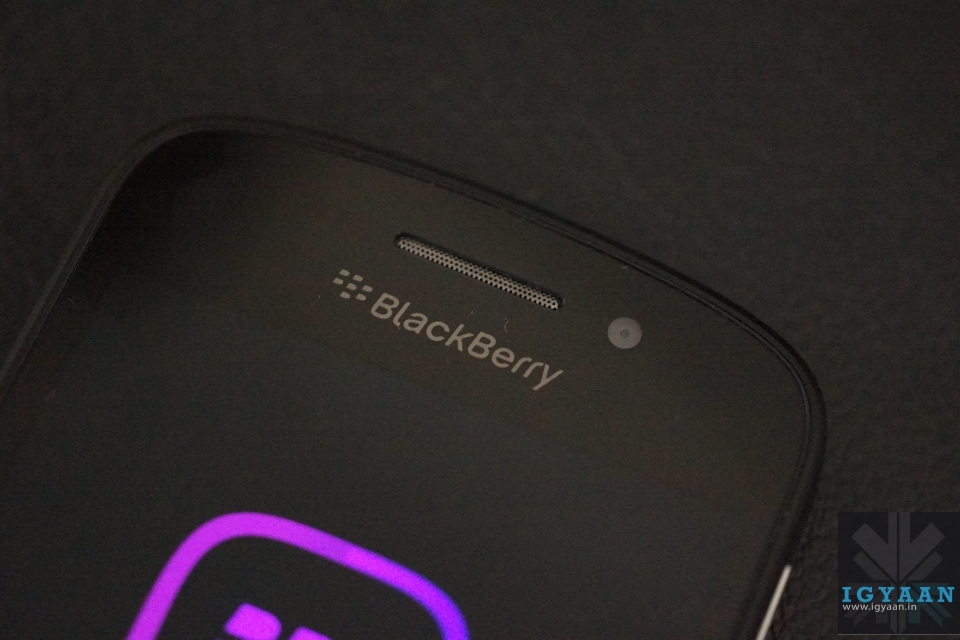
    Reuters reports that some potential bidders are looking at breaking BlackBerry apart and keeping only the operating system and the patents around its keyboard. 

    For several years many investors have been pushing BlackBerry to be split up into several parts: network, device and patents. Unfortunately, something of this nature just might happen.

    According to a report in Reuters, several unknown bidders have signed confidentiality agreements and are looking into ways to break the company up into two parts – operating system (BlackBerry 10 and the network assets) and its vast collection of patents, specifically highlighting its keyboard. Possibly vanishing from the plan is its hardware production. However, there is a glimmer of hope as the report states there might be interest from “a Canadian pension fund to team up with an investor to buy the whole company, which is currently worth a little more than $5 billion.”

    Reuters notes that “According to analysts, BlackBerry’s assets include a shrinking, yet well-regarded services business that powers its security-focused messaging system, worth $3 billion to $4.5 billion; a collection of patents that could be worth $2 billion to $3 billion; and $3.1 billion in cash and investments. Even at a conservative estimate, that is more than the company’s $5.4 billion market value. Analysts said the smartphones that bear its name have little or no value and it might cost $2 billion to shut the unit that makes them.”

    BlackBerry announced in August that it was looking into “strategic alternatives”, including selling itself to help figure out its future. Its market value has fallen to $5.4 billion, from $84 billion at its peak in 2008. 

    [Via]

  • Here is Why Microsoft’s Buying Nokia

    Here is Why Microsoft’s Buying Nokia

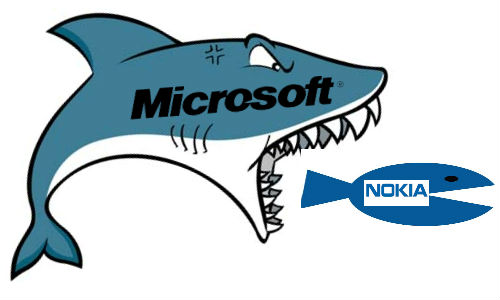
    Microsoft and Nokia have been strategic partners for the manufacture of Windows Phone devices for  a couple of years. Microsoft helped the company bail out of its financial woes when Nokia took 1 Billion USD to exclusively manufacture Windows Phone devices and drop plans to make devices on Android, Symbian and Meego. Microsoft’s acquisition of Nokia comes in after the successful transition of Motorola into Google, for the company may be a proud owner of a high tech manufacturing brand. Such an acquisition will enable Microsoft to manufacture devices as per their own set norms and create benchmarks for other partners. Along with the hardware and services Microsoft will also become the owner of a wide array of patents and licenses that Nokia owns, one of which earns US $ 1 for every iPhone sold.

    nokia

    Microsoft puts it out there, the company claims that buying a manufacturer like Nokia will enable Microsoft to deliver a

     “first-rate Microsoft phone experience for users”.


    Microsoft has been trying to be a hardware manufacturer in the past few years, as it attempted with the “bust” Windows RT and 8 based Surface Tablets, the Acquisition of Nokia could lead to new Hardware under the Microsoft name in the mobility segment. What the future of the once world leader in Mobile telephone will be post the acquisition is unknown, but we hope that this does not pan out similar to the HP – Palm acquisition, which ended the life of a very innovative company.

    Microsoft could easily be blamed for this acquisition as well, 3 years ago Nokia was valued at well over US $ 25 Billion, Microsoft’s so called “Strategic Partnership” basically ended the marketshare that Nokia had enjoyed in the good old days of Symbian and S40. Analysts claim, if Nokia had stuck to new operating systems like Meego and  relatively young Android ( at the time), the company would have prospered and would have been close to the likes of Samsung and Apple in number of movements. 

    Today Nokia heavily depends on its feature-phone sales for its revenues, and in a global world where the 100$ smartphone is overtaking the 100$ feature phone, Nokia may have realized the limited lifecycle it had left. 

    Microsoft is no stranger to takeovers, and with many a past companies under its sleeve, Nokia would be more of a trophy, just so the execs at Redmond can say “Hey, We manufacture our own phones! Just like Apple and Google.”

    Microsoft really has an opportunity, with the vast array of designers and young minds at Nokia, years of experience and a complete team of experts in mobility, maybe the top brass at Microsoft will be more open to world changing ideas, than they were back at Nokia. Heck in 2006 a fully capacitive touchscreen phone was rejected within the Finland HQ at Nokia stating that the world was not ready for a full touch phone. In 2007 June, the iPhone was launched, Nokia couldn’t have been more wrong.

  • Google Buys Virtual Imaging Patents From Hon Hai

    Google Buys Virtual Imaging Patents From Hon Hai

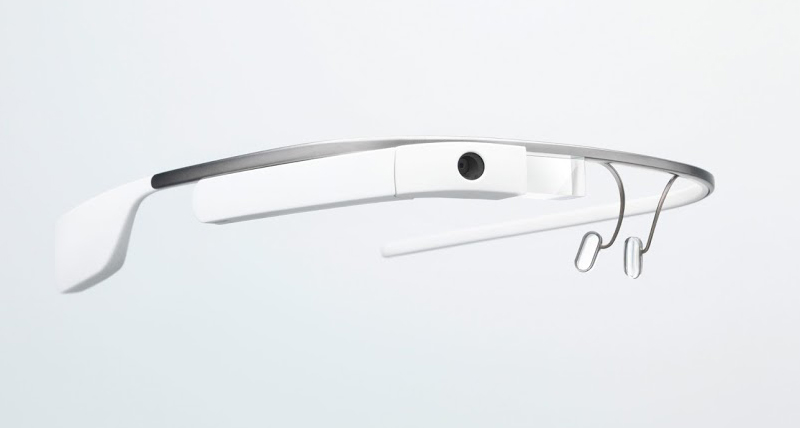
    Google has bought patents for wearable technology used in gaming and training simulations from Hon Hai Precision Industry Co., a primary assembler for Apple Inc.

    Hon Hai, a major supplier for Apple and other top IT brands, sold a portfolio of Head Mounted Display (HMD) patents, the company said in a news release on Friday.

    The technology, dubbed Head Mounted Display, is commonly used in aviation and ground displays, engineering and scientific design applications, gaming devices and training and simulation tools.

    Hon Hai assembles iPhones and iPads, and the company is hiring as many as 90,000 workers in the Chinese cities of Shenzhen and Zhengzhou to meet client demand in the fourth quarter. It said it had applied for over 55,000 patent rights globally, of which over 5,000 have been approved.

    Hon Hai has said it will focus on developing new technology, intellectual property rights and e-commerce as it looks to reduce its reliance on Apple.

    Google has been working on the release of Google Glass, a wearable device with a head-mounted display that currently is only available to developers and hand-picked testers.

    Last month, Google invested in a Taiwanese chip maker that manufactures components used in the wearable device. It said it would buy shares to hold a 6.3 percent interest in Himax Display, a subsidiary of Himax Technologies.

    [Via]

iGyaan Network
Privacy Overview

This website uses cookies so that we can provide you with the best user experience possible. Cookie information is stored in your browser and performs functions such as recognising you when you return to our website and helping our team to understand which sections of the website you find most interesting and useful.