Tag: company

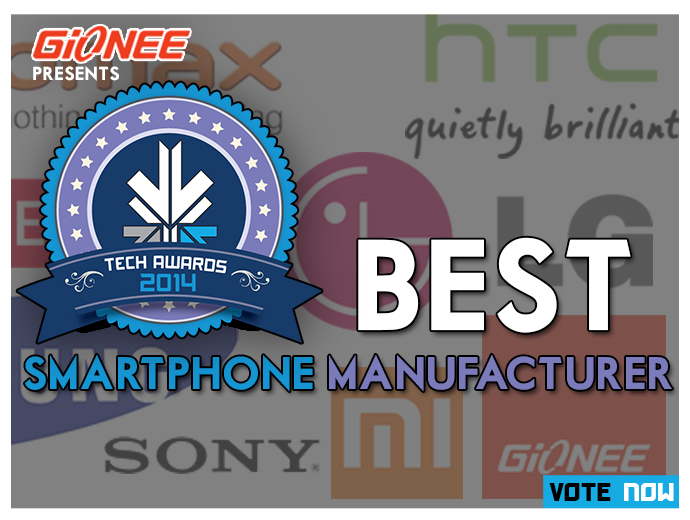
  • Winner | Best Smartphone Manufacturer | iGyaan Tech Awards 2014

    Winner | Best Smartphone Manufacturer | iGyaan Tech Awards 2014

    There have been a flux of new smartphone manufacturing companies this year. To attract new customers it is important to have a device with the latest technology but also a device that looks good and is easy to use. The company should be active socially and should have excellent Service and support network along with pan-nation availability. This is a list of companies who have managed to think out of the box and comes up with the most inventive smartphone.

    These are those smartphone manufacturer that kept you at the edge of your seat.

    Voting is now Closed! The Winner for the Best Smartphone Manufacturer in the iGyaan Tech Awards 2014 is Motorola.

    The winner of the giveaway is announced HERE.

    [button link=”https://www.igyaan.in/awards/” size=”large” text_size=”beta” newtab=”on”]Back To Awards Categories[/button]


  • Google Acquires Content Sharing App Bump

    Google Acquires Content Sharing App Bump

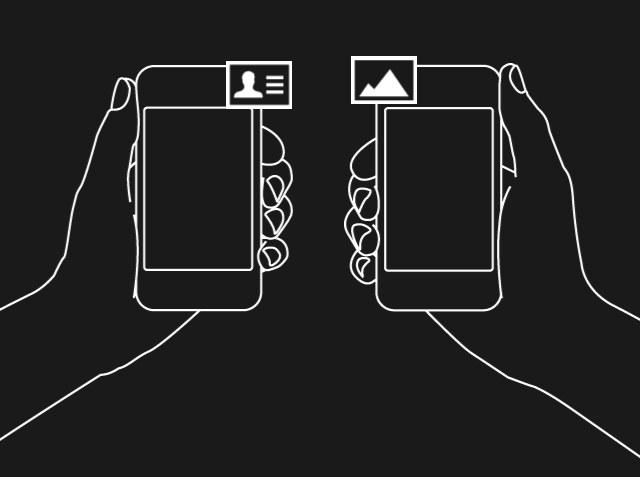
    Bump, the contact and media sharing app for Android and iOS, has been acquired by Google.

    Bump co-founder and chief executive David Lieb said the company was “thrilled” to join Google, citing similar passions for sharing information between people and devices. 

    In September 2011, the company announced it had 50 million downloaders and 10 million active “bumpers.” Just less than a year later, more than 600 million photos were shared by “bumping” phones. Later it released an iPhone-only version photo-sharing app dubbed Flock (not to be confused with the social browser of the same name).

    It’s worth adding here that Bump doesn’t use NFC, merely “whatever Internet connection is available on your device”, be that WiFi or cellular. The mobile app uses the phone’s sensors to “feel” the bump, thus actioning the actual transfer.

    “The Bump team has demonstrated a strong ability to quickly build and develop products that users love, and we think they’ll be a great fit at Google,” said a Google spokesperson. Google declined to comment on what team Bump will be joining.

    The full announcement on the Bump blog is as follows.

    [toggle title=”Announcement”]“We’re excited to announce that the Bump team is joining Google!
    Our mission at Bump has always been to build the simplest tools for sharing the information you care about with other people and devices. We strive to create experiences that feel like magic, enabled behind the scene with innovations in math, data processing, and algorithms. So we couldn’t be more thrilled to join Google, a company that shares our belief that the application of computing to difficult problems can fundamentally change the way that we interact with one another and the world.
    Bump and Flock will continue to work as they always have for now; stay tuned for future updates.
    We’d like to extend a special thank you to all of you who have used our products so far. It continues to be a pleasure to serve you, and your feedback and evangelism inspire us every day.
    David Lieb
    CEO and cofounder
    Bump
    We also want to thank our investors, advisors, and supporters — Marc Andreessen and all of a16z; Greg McAdoo, Tim Lee and all of Sequoia; Paul Graham, Jessica Livingston, and everyone at Y Combinator; Ron Conway and SV Angel; Ram Shriram of Sherpalo; Aydin Senkut of Felicis — and our friends and family who have encouraged us to dream big and push the world forward.”[/toggle]

    [Via]

  • SMS Curb May Lead to 7-8% Revenue Loss To Mobile Companies

    SMS Curb May Lead to 7-8% Revenue Loss To Mobile Companies

    Restriction on SMSes to five per day is not only causing problems for millions of mobile phone users but may also lead to loss of 7-8 percent revenue of telecom operators for the month.

    The government had banned bulk SMSes and MMSes for 15 days across the country from 18 August to check spread of
    rumours which has led to exodus of people from northeastern states from cities like Bangalore, Hyderabad and Pune.

    There were reports of widespread circulation of SMSes and MMSes containing misleading information about Assam violence, threats to people from northeast states living in other parts of the country and doctored videos.

    While pre-paid mobile users, who account for over 90 percent of the 930 million mobile subscriber base, are unable to send more than five messages per day, postpaid users do not seem to be facing any problem.

    People across the country wanting to wish their friends and relatives for Eid are feeling the pinch of the government order restricting the text messages.

    “A ban of 15 days means they could lose around seven to eight percent of revenue this month from this service alone,” Cellular Operators Association of India (COAI) Director General Rajan S Mathews said.

    Operators on an average get 15-18 per cent revenue from data services of which SMS is a part, he said.

    Mathews, however, added that “all the members will definitely make every effort to abide by the rules, as national security and human lives are at stake.”

    Youngsters are the largest users of SMS and many of them are upset by the restriction. “I wanted to SMS my Eid greetings to friends as it is not possible to call everyone. However, after five messages, I am unable to send anymore messages. As a subscriber, I feel cheated,” Pragya Gupta, a student at Delhi University said.

    The order, which limits the number of SMS’ a subscriber can send for the next 15 days, was given after bulk messages were circulated that provoked exodus of northeast people from various cities like Bangalore and Pune. “SMS has become a way of life. As a media professional, I need to stay in touch with industry peers and it is generally over messages. However, with this ban, we are finding it difficult and it is impacting our work,” Rakesh Kumar Jha, a PR professional said.

    He, however, added that “the situation is very sensitive and I can understand the government’s decision to ban bulk sms in order to prevent any untoward incident”.

    Subscribers trying to send their sixth SMS received messages like “As per the government’s order, your limit is 5 SMS a day”.

    The order however does not cover transactional messages related to banking, financial institutes and railways.

    [FirstPost]

  • RIM looks to sell NewBay, other assets

    RIM looks to sell NewBay, other assets

    BlackBerry maker Research In Motion is looking to sell cloud services provider NewBay and some of the other minor assets it recently acquired, as part of a strategic review process, according to a source familiar with the matter.

    RIM acquired NewBay, a provider of photo, video, and social-networking tools for smartphones and computers, in October 2011 for reportedly around $100 million, as it sought to roll out a new strategy to stem its steady decline.

    RIM declined to comment on the sale report.

    RIM, based in Waterloo, Ontario, is a pioneer in the smartphone industry, but has struggled over the last couple of years, as its aging line-up of BlackBerry smartphones have not been able to compete against more-advanced devices like Apple Inc’s iPhone and a slew of other devices based on Google Inc’s Android software.

    The acquisition of NewBay in Dublin, Ireland, was a huge part of the former RIM leadership’s plan to alter its course and boost service revenue by having carriers use its services for messaging, content delivery and analytics on all smartphones.

    When RIM bought it in late 2011, NewBay had over 80 million subscribers. NewBay stores media on its own servers and delivers it to any Internet-connected device, including mobile phones, personal computers and tablets.

    But in the face of mounting pressure RIM’s Co-Chief Executives Mike Lazaridis and Jim Balsillie resigned early this year. RIM’s new CEO Thorsten Heins has begun a strategic review process within the company and is focused on delivering a new line-up of devices that run on RIM’s new BB10 operating system, in the first-quarter of 2013.

    Since taking the reins early in 2012, Heins has retained RBC Capital Markets and JPMorgan to explore options for RIM.

    Its share price has fallen more than 60 percent over the course of the last year, as RIM has continued to hemorrhage market share to the likes of nimbler competitors like Apple and Samsung Electronics Co.

    RIM’s shares closed more than 6 percent higher at $8.29 on Friday on the Nasdaq, after Bloomberg reported that tech giant International Business Machines Corp had at one point considered buying RIM’s enterprise division.

    Source : Reuters 

  • Oracle to Buy Cloud Infrastructure Technology Provider Xsigo

    Oracle to Buy Cloud Infrastructure Technology Provider Xsigo

    Oracle Corp. on Monday agreed to acquire network-technology provider Xsigo Systems Inc. for an undisclosed sum, broadening the software giant’s already growing footprint in the data center.

    Based in San Jose, Calif., Xsigo provides appliances that more efficiently manage the tangle of connections needed to access stored data. The technology cuts electricity costs and boosts performance for companies that manage large data centers.

    Privately held Xsigo has more than 300 enterprise customers, according to its website, including Verizon Communications Inc. (VZ) and BT Group PLC (BT).

    Oracle’s latest acquisition, expected to close this fall, comes as more companies opt to run their computer systems in the cloud–a catch-all term for software and data accessed online rather than through an onsite machine.

    Managing the software and servers that support such systems has become a multibillion-dollar business, prompting Oracle Chief Executive Larry Ellison, who once dismissed the “cloud” term as “complete gibberish,” to actively pursue the model along with his Silicon Valley peers.

    Cloud computing relies on virtualization, a process that allows users to run the operations of several computers on a single machine. The process puts an enormous burden on networks.

    Now, cloud-computing companies are taking a growing interest in controlling the routers and switches of networks by using a similar virtualization model in order to manage data-center hardware and cut down on bottlenecks and inefficiencies.

    VMware Inc. (VMW), which pioneered the virtualization model with software, last week agreed to pay up to $1.26 billion for networking-software provider Nicira Inc.

    Xsigo’s technology differs from Nicira’s, which uses software to virtually manage an entire network. Xsigo’s hardware addresses a narrower part of the cloud.

    “Most people think of software-defined networking as something that creates a new network…on top of the existing physical network,” ISI Group analyst Brian Marshall said.

    Oracle also has remained active in the software sector. Just this month, the technology giant agreed to buy the social-marketing company Involver and said it would acquire privately held Skire, a provider of capital program management and facilities management applications.

    Oracle has also bought the cloud-based customer service company RightNow Technologies Inc. for $1.43 billion and the human-resources software maker Taleo Corp. for $1.9 billion.

    “They are already racing ahead on the software side,” said Global Equities Research analyst Trip Chowdhry. “Now they are strengthening their cloud infrastructure.”

    Xsigo, founded in 2004, was funded by Kleiner Perkins, Khosla Ventures, Greylock Partners and North Bridge Venture Partners.
  • Apple to buy fingerprint sensor maker AuthenTec for $356 million

    Apple to buy fingerprint sensor maker AuthenTec for $356 million


    Apple Inc has agreed to buy AuthenTec Inc for $8.00 per share, the maker of fingerprint sensor chips used in personal computers said, in a deal valued at about $356 million.

    AuthenTec makes security software and chips for mobile phones that it licenses to companies such as Samsung Electronics Co Ltd (. It also produces chips for fingerprint recognition and near-field communication (NFC).

    Melbourne, Florida-based Authentec disclosed the deal in a filing with the U.S. Securities and Exchange Commission.

    Based on Thursday’s closing price $5.07, the offer represents a premium of 58 percent for AuthenTec’s shares.

    AuthenTec, which also counts Lenovo Group Ltd , Fujitsu Ltd  and Dell Inc ( as customers, has annual revenue of about $70 million.

  • Facebook acquires Mac, iOS app developer Acrylic

    Facebook acquires Mac, iOS app developer Acrylic


    Facebook has acquired Acrylic Software, a Vancouver-based developer of Mac and iOS apps.

    The small firm is known for the RSS app Pulp (a personalized newspaper) and the secure database app Wallet (for securely storing passwords, credit-card numbers, etc.).

    The company has decided to cease development of the two apps, which Facebook itself has not acquired. This means that the apps will continue to be available for download and purchase, but will no longer be updated.

    Acrylic has two employees and both are moving to work on the social-networking giant’s design team in San Francisco. Additional details of the acquisition were not disclosed, but this appears to be mainly a talent acquisition; Facebook will not be getting the technology behind the service, or its user data.

    [toggle_box title=”Statement” width=”Width of toggle box”]

    Facebook is an invaluable service that we all use daily, and a company I believe is one of the most innovative and important around today. After visiting late last year, I discovered that we shared many of the same core product design goals and principles, and it soon became obvious that it was a natural fit. Simply put, there’s an opportunity at Facebook to have a big impact in many people’s lives. More importantly, Facebook is full of extremely talented people who will be able to help realize its full potential in the years to come.

    Our products and services have not been acquired by Facebook, and while there are no plans for further development on them, Wallet and Pulp will continue to remain available for download and purchase in their current form. We’ll certainly be the first to let you know of any updates or changes here in the future.

    A special thanks to all of our customers and supporters who have helped us grow and build the best products possible throughout the last four years. We wouldn’t have been able to do it without you.

    Dustin MacDonald
    Acrylic Software

    [/toggle_box]

  • Zync Z-999 plus tablet launched at INR 11,999

    Zync Z-999 plus tablet launched at INR 11,999

    Whoops! Something went wrong!

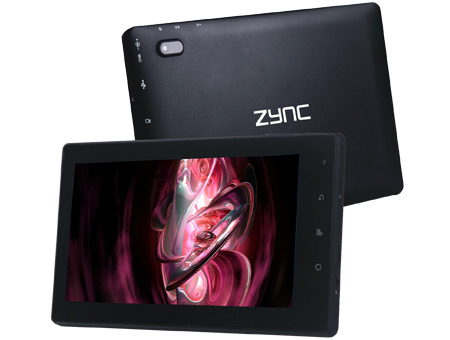
    Noida-based computer maker Zync Global today launched its 3G-enabled tablet PC priced at Rs 11,990, which the company says will help it achieve a sales target half a million devices in the current fiscal. It comes with Android 4.0 and 3G.

    The Z-999 plus comes with an inbuilt Wi-Fi for file transfer along with a 2 mega pixel back camera and VGA front camera for video chat. The tablet is also equipped with a HD video playback support, HDMI support, 8GB iNand memory expandable to 32GB, keyboard support function and has an inbuilt 3G sim card slot. The high resolution LED screen is perfect for watching movies, multi-player games and downloading and sharing data.

    It is powered by a 1.5GZ single core ARM Cortex A8 processor and 512 MB RAM. Its size and light weight of 340 gm and excellent battery life of 4200 mAh makes it an ideal device in the low cost tablet market. It only measures 8mm- which is slimmest in its category.

  • Tekfusion Twinwoofers In Ear Earphones Initial Hands on Review

    Tekfusion Twinwoofers In Ear Earphones Initial Hands on Review

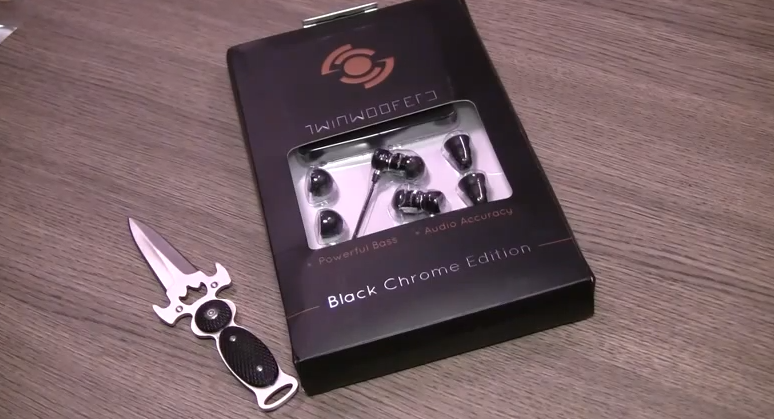
    We recently got our hands on the Tekfusion Twinwoofers in-ear headphones and got down to an initial hands-on review.

    Technical Features :

    Frequency Response : 19-21 KHz 
    Impedance : 16 Ohms 
    Pressure Level : 113 dB 
    Net Weight : 30g (1.06Oz) 
    Color : Black Chrome 
    Cable Length : 1.1m 
    Cable Type : Symmetric
    1 Year Manufacturer’s Warranty

    The package consists of the Twinwoofers In-Ear Hedphones , 5 pair of Eartips – 3 pair regular S/M/L, and 2 pair Tripple flange – M/L, Clip & Cable Slider , a Carry Pouch and a User Manual. 

    The first thing you’ll notice is they are light-weight but pretty tough. They are made from metal, and have partial gloss and partial matte finish – which gives them a very premium look . The twin-woofer logo adorns the back of the drum and overall the headphone is very well crafted. The earphones come with a 3.5 mm gold plated jack.

    The initial impression of the headphones was that they perform really well at low volume but a slight clipping can be noticed at high-volume bass. We will take a look into this once we come out with our full in-depth review but for now, for a price tag of INR 1000-1200 these are definitely one of the best earphones in the market. 

    Check out our hands-on review here :- 

  • IBM – Milestones from the last Century

    IBM – Milestones from the last Century

    IBM is one of the largest IT companies in the world. Yesterday it turned 100 years old. It has grown from a pre-World War I conglomeration of companies making tabulating machines and time-keeping devices into a globe-spanning technology behemoth that pioneered the development of electronic computers and dominated the mainframe era. The company holds a vast array of patents in a vast number of technologies.

    It has crossed many milestones in the last century. Here are a few of them:

    • 1889 – The Bundy Manufacturing Co., a time recording equipment maker is founded.
    • 1896 – The Tabulating Machine Co., a punched-card, electric tabulating equipment maker is founded
    • 1911 – The Computing-Tabulating-Recording Company is founded which merges the Bundy Manufacturing Co., The Tabulating Machine Co., The Computing Scale Company and the International Time Recording Co. It has a total of 1300 employees.
    • 1914 – Thomas J. Watson, Sr., joins the Computing-Tabulating-Recording Company and ends up as President in 11 months. The company more than doubles its revenues to $9 million in his first four years.
    • 1924 – The Computing-Tabulating-Recording Company is formally renamed International Business Machines.
    • 1928 – IBM introduces the 80 column punch card which doubles previous capacity and remains a standard for the next 50 years.
    • 1933 – IBM enters the typewriter business by acquiring Electromatic Typewriters
    • 1944 – IBM introduces the Automatic Sequence Controlled Calculator or the Mark I, which is the first large scale computer to accomplish operations automatically.
    • 1946 – IBM introduces the first commercially availabe machine with electronic arithmatic circuits, the 603 Electronic Multiplier.
    • 1952 – Thomas J. Watson, Jr. becomes President of IBM.
    • 1957 – IBM introduces FORTRAN, which is used to this day.
    • 1964 – IBM bets $5 billion on future trends by introducing the IBM System/360 which used Solid Logic Technology microelectronics.
    • 1969 – The first manned mission to the moon included an onboard computer designed at IBM
    • 1971 – Frank Cary becomes CEO of IBM and the Floppy disk is also introduced. It becomes a PC data storage standard.
    • 1981 – IBM introduces the worlds cheapest and smallest Personal Computer at $1565. It partners with Microsoft to supply the Operating System and allows competitors to buy it for IBM-Compatible clones which paves the way for competitors like Dell and Compaq.
    • 1984 – IBM introduces its second generation PC with a 6Mhz Intet 80286
    • 1991 – IBM shocks the industry by announcing its first annual loss of $2.82 billion
    • 1995 – IBM acquires Lotus Development Corp. and its Notes software making it the worlds largest software company. It also launches the IBM Thinkpad running on an Intel Pentium 133Mhz processor. It is an instant success.
    • 1997 – The IBM Deep Blue supercomputer, capable of calculating 200 million chess moves per second, defeats chess Grand Master Garry Kasporov.
    • 2005 – IBM sells its PC business to Lenovo to focus on software development.
    • 2011 – Watson, the IBM AI, which comprises of 90 IBM 750 servers defeats two Jepordy game show champions in a two match game.
iGyaan Network
Privacy Overview

This website uses cookies so that we can provide you with the best user experience possible. Cookie information is stored in your browser and performs functions such as recognising you when you return to our website and helping our team to understand which sections of the website you find most interesting and useful.